

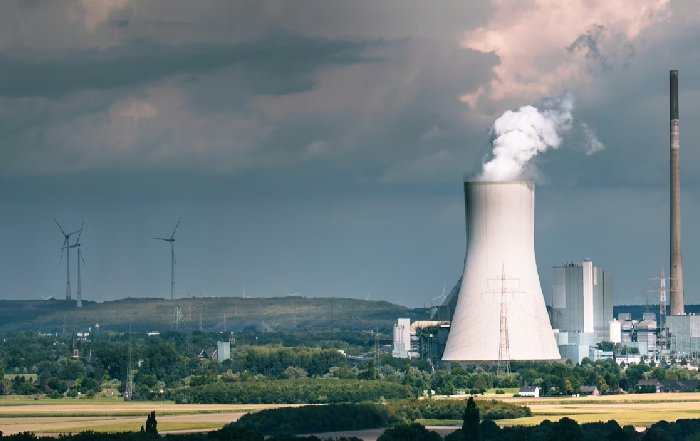
The Renaissance in Nuclear Energy Investment
Nuclear Power's Return to the Center of the Energy Debate
Nuclear energy has moved from the margins of policy debates to the core of global energy and industrial strategy, and across the editorial desks of BizNewsFeed.com it is increasingly clear that this shift is not a passing trend but a structural re-rating of an entire sector. After a decade dominated by solar, wind and natural gas, governments, institutional investors and major corporations in the United States, Europe and Asia are now repositioning nuclear power as a foundational technology for net-zero pathways, energy security and industrial competitiveness, with capital flows, regulatory reforms and corporate strategies converging in a way not seen since the original nuclear build-out of the mid-20th century.
This renaissance is driven by a confluence of forces: the hard arithmetic of decarbonization, the geopolitical shock of energy insecurity, the maturation of new reactor technologies and the increasing recognition that without a substantial contribution from nuclear, the ambitions embedded in the Paris Agreement and national net-zero pledges will remain aspirational. For the business and investment community that follows BizNewsFeed across its coverage of energy and the global economy, the revaluation of nuclear is reshaping capital allocation, supply chains, technology bets and even workforce planning.
From Post-Fukushima Retrenchment to Strategic Priority
The current wave of investment cannot be understood without recalling the deep skepticism that followed the 2011 Fukushima Daiichi accident in Japan, when countries such as Germany accelerated nuclear phase-outs, investors marked down nuclear utilities and project pipelines stalled or were cancelled. For much of the 2010s, nuclear was seen as high-risk, politically fraught and financially unattractive compared with rapidly falling costs in solar and wind, while gas provided flexible backup at scale. The narrative began to change only as the climate clock ticked louder and as the limitations of variable renewables without large-scale storage became more apparent in real-world grids.
By the early 2020s, leading institutions such as the International Energy Agency (IEA) and the Intergovernmental Panel on Climate Change (IPCC) were publishing scenarios that showed nuclear generation needing to expand significantly if the world were to maintain a credible pathway to 1.5-2°C. Analysts and policymakers could explore these net-zero scenarios and see that, even under optimistic assumptions for renewables, efficiency and storage, some mix of firm, low-carbon power-nuclear, hydro, geothermal, or fossil with carbon capture-was indispensable. At the same time, the economic and social costs of coal and unabated gas, including air pollution and volatile fuel prices, pushed governments to reconsider their earlier reluctance.
The decisive inflection point came with the energy crises of the early 2020s, triggered by geopolitical tensions and supply disruptions that sent gas and power prices soaring in Europe and affected markets from the United Kingdom and Germany to South Korea and Japan. Energy security, once a secondary consideration behind climate rhetoric in some advanced economies, returned with force to cabinet rooms, boardrooms and trading floors. In that context, nuclear's attributes-high capacity factors, long asset lifetimes, limited exposure to fuel price spikes and domestic industrial content-became strategic advantages rather than liabilities.
Policy Shifts Across Regions: From Moratoriums to Mandates
The investment renaissance has been underpinned by explicit policy shifts across major economies, which are now moving from ambivalence to active support for nuclear deployment, lifetime extensions and innovation. In the United States, the Biden administration and Congress have combined tax incentives, loan guarantees and regulatory reforms to support both existing plants and new builds, including advanced reactors. Business readers tracking U.S. industrial policy can review Department of Energy nuclear programs that now sit alongside incentives for batteries, hydrogen and clean manufacturing as pillars of a broader competitiveness agenda.
In the United Kingdom, nuclear has been formally classified as a key component of the national energy mix, with the government backing large projects such as Hinkley Point C and Sizewell C, while creating a framework for small modular reactor deployment in partnership with Rolls-Royce and international developers. Across Europe, the policy picture is more fragmented, yet the overall direction has shifted: France has recommitted to its nuclear fleet and announced plans for new reactors; several Central and Eastern European states, including Poland and the Czech Republic, are advancing nuclear programs as they move away from coal; and the European Union's controversial but consequential decision to include nuclear in its sustainable finance taxonomy under certain conditions has opened the door to a wider pool of green capital.
Germany remains an outlier with its completed phase-out, yet even there, the debate has not fully disappeared, particularly within industrial circles concerned about competitiveness and power prices. Meanwhile, countries such as Sweden and Finland, which once considered winding down nuclear, have pivoted toward extending plant lifetimes and exploring new projects. Nordic policymakers and investors are increasingly interested in how nuclear can complement vast wind resources in a balanced, low-carbon system that supports electrification of heavy industry and transport.
In Asia, the investment story is even more pronounced. China continues to expand its nuclear fleet at a rapid pace, integrating domestic designs and building a vertically integrated supply chain that reinforces its ambition to be a global nuclear exporter. South Korea, after a temporary policy reversal in the late 2010s, has re-embraced nuclear as a core industrial and export sector under subsequent administrations. Japan has cautiously restarted reactors under stricter safety regimes to stabilize its power system and reduce import dependence. Across Southeast Asia and emerging markets in regions such as Africa and South America, nuclear is now being evaluated not as an exotic technology but as a credible option within diversified long-term energy strategies, often in partnership with established nuclear nations and multilateral institutions.
For global investors following cross-border developments and capital flows, these policy moves signal that nuclear is regaining its status as a mainstream infrastructure asset class in key jurisdictions, albeit one still shaped by national politics and regulatory culture.
The Rise of Advanced Reactors and Small Modular Designs
While traditional large light-water reactors remain central to many national programs, the most dynamic area of nuclear investment today lies in advanced reactors and small modular reactors (SMRs), which promise to address some of the cost, schedule and siting challenges that plagued past megaprojects. Developers in North America, Europe and Asia are racing to commercialize designs that offer standardized factory manufacturing, enhanced passive safety features, reduced construction timelines and flexible deployment options, from remote mining operations in Canada and Australia to industrial clusters in Germany and the United Kingdom.
Companies such as NuScale Power in the United States, Rolls-Royce SMR in the UK and several emerging players in Canada, France and South Korea have attracted substantial venture and strategic capital, often in partnership with utilities, engineering firms and industrial off-takers. Investors who previously focused exclusively on software or consumer technology are now adding advanced nuclear developers to their climate and infrastructure portfolios, seeing an opportunity to back a potentially transformative hardware platform rather than incremental efficiency improvements. For readers of BizNewsFeed who follow technology and innovation trends, the nuclear SMR segment has begun to resemble other deep-tech spaces, with complex regulatory pathways, long development cycles and the possibility of outsized returns for those who can navigate both engineering and policy risk.
Beyond SMRs, there is growing attention to next-generation concepts such as high-temperature gas reactors, molten salt reactors and fast reactors, some of which aim to use spent fuel or depleted uranium as input, potentially contributing to long-term waste management solutions. While commercial timelines for many of these technologies extend into the 2030s and beyond, early-stage funding, often supported by public-private partnerships and national innovation programs, is already flowing. Entrepreneurs covered in BizNewsFeed's founders and funding sections increasingly frame advanced nuclear as part of a broader climate technology stack that includes long-duration storage, green hydrogen and carbon removal, all of which require abundant, reliable and low-carbon power.
Financing Models: From Mega-Projects to Portfolio Assets
One of the most persistent obstacles to nuclear investment has been the perception of unmanageable financial risk, driven by notorious cost overruns and delays in projects across Europe and North America. The renaissance underway is therefore as much about financial innovation and risk allocation as it is about technology. Governments and utilities are experimenting with models that shift nuclear from bespoke, one-off engineering feats toward more standardized, replicable and investable assets that can sit within infrastructure and pension fund portfolios.
In the United Kingdom, the adoption of a regulated asset base (RAB) model for new nuclear is designed to provide revenue certainty during construction, lowering the cost of capital and making it easier to attract long-term institutional investors. In the United States and Canada, federal and provincial loan guarantees, production tax credits and contracts for differences are being used to de-risk early projects and create a template that can later be scaled with more private capital. Multilateral development banks and export credit agencies are also reevaluating their nuclear policies, particularly for SMRs that can be deployed in smaller increments aligned with the needs of developing economies.
For global banks and asset managers that track markets and capital trends, nuclear is gradually shifting from a niche exposure to a more diversified opportunity set that includes utilities, engineering and construction firms, fuel cycle companies, component manufacturers and specialized service providers. The emergence of nuclear-linked green bonds and sustainability-linked loans, particularly in jurisdictions that classify nuclear as eligible for green finance, further expands the investor base. To understand how sustainable finance frameworks are evolving, business leaders can review guidance from the OECD and other international bodies, which increasingly acknowledge the role of nuclear in certain decarbonization pathways while emphasizing stringent safety and governance standards.
Nuclear and the ESG Debate: Reconciling Risk and Climate Imperatives
The re-rating of nuclear energy has forced a complex reassessment within the environmental, social and governance (ESG) investment community, where nuclear was long viewed with suspicion or outright exclusion. Climate-focused investors now face a tension between the urgent need for deep decarbonization and lingering concerns about safety, waste and proliferation. As a result, the ESG conversation has become more nuanced, with some funds revising exclusion lists and others adopting a case-by-case approach based on regulatory standards, operator track records and national governance.
Independent analyses by organizations such as the World Nuclear Association and academic research groups have highlighted nuclear's lifecycle emissions profile, which is comparable to wind and significantly lower than gas or coal. Analysts can examine comparative lifecycle assessments that show nuclear's strong performance on carbon intensity, land use and material throughput. At the same time, credible ESG frameworks emphasize that these climate benefits must be weighed against the long-term management of high-level waste, the potential for severe accidents, even if rare, and social license issues in host communities.
For institutional investors with fiduciary duties and reputational considerations, this has led to more granular due diligence processes that scrutinize everything from plant design and safety culture to emergency preparedness and decommissioning plans. Some asset owners now classify nuclear as "transition" rather than "green," allowing limited allocations within broader portfolios, while others, particularly in Europe, remain cautious. Business leaders following sustainable business practices and green transition strategies are increasingly aware that the nuclear debate is not a binary one but a spectrum of risk-reward profiles that vary by country, operator and technology.
Supply Chains, Fuel Security and Geopolitical Dynamics
The renaissance in nuclear investment is also reshaping global supply chains and strategic relationships, with implications that extend far beyond the energy sector. Uranium mining, conversion and enrichment, fuel fabrication, reactor component manufacturing and specialized engineering services are all experiencing renewed demand and, in some cases, capacity constraints. Countries seeking to expand or maintain nuclear fleets are now paying close attention to the resilience and diversification of their fuel supply, particularly in light of geopolitical tensions and sanctions affecting certain suppliers.
The World Nuclear Association and other industry bodies have underscored the need for diversified uranium and fuel cycle capabilities, and policymakers in the United States, Canada, Australia and Europe are exploring ways to strengthen domestic and allied supply chains. Businesses with exposure to mining, advanced materials and industrial equipment are already seeing the knock-on effects in project pipelines and capital expenditure plans. To understand the broader resource implications, executives can review analyses of critical materials and energy security, which highlight how the energy transition, including nuclear, is reshaping demand for specific minerals and processing capabilities.
Geopolitically, nuclear cooperation agreements, export deals and technology partnerships are becoming tools of statecraft, influencing alignments across Europe, Asia, Africa and South America. Russia's historical role as a major exporter of reactors, fuel and services has prompted many countries to explore alternative partners, including consortia led by the United States, France, South Korea and Japan. In emerging markets from Africa to Southeast Asia, nuclear offers not just power but also prestige, industrial development and long-term diplomatic ties, making project decisions highly strategic and often contested.
Industrial Decarbonization, AI and the Demand for Firm Power
Beyond the power sector, the resurgence of nuclear investment is intimately linked to broader industrial and technological transformations that BizNewsFeed covers across its business and technology reporting. Heavy industries such as steel, cement, chemicals and refining, which are central to the economies of countries like Germany, China, the United States and South Korea, face mounting pressure to decarbonize while remaining competitive. Many of the most promising pathways, including green hydrogen production, electrified process heat and carbon capture, require large volumes of low-carbon electricity and heat on a continuous basis.
Nuclear plants, particularly advanced reactors capable of high-temperature steam or load-following operation, are well suited to support these applications, either as dedicated industrial energy sources or as part of integrated energy parks. In regions such as the U.S. Gulf Coast, the Ruhr area in Germany or industrial clusters in Japan and South Korea, policymakers and companies are exploring how co-located nuclear and industrial facilities could unlock new decarbonization options and anchor long-term investment. This industrial dimension is one reason why nuclear is increasingly discussed not just in energy ministries but also in trade, industry and finance portfolios.
At the same time, the rapid expansion of artificial intelligence, cloud computing and digital services is creating unprecedented demand for reliable electricity, with hyperscale data centers proliferating in the United States, Ireland, the Netherlands, Singapore and beyond. As BizNewsFeed readers following AI and digital infrastructure developments know, the energy intensity of AI training and inference workloads is becoming a strategic issue for technology companies and host governments. Nuclear power, with its high capacity factors and low emissions, is emerging as a potential backbone for data center clusters, particularly where land constraints or grid limitations make massive renewables build-outs challenging.
Several technology companies and data center operators are now actively evaluating long-term power purchase agreements linked to nuclear plants, and some are even exploring direct investment or co-development of SMR projects near major facilities. This convergence of digital and nuclear infrastructure underscores how energy choices are increasingly intertwined with national strategies for AI, cloud and advanced manufacturing, from the United States and Canada to Singapore, Japan and the Nordics.
Workforce, Skills and the Global Jobs Landscape
The nuclear renaissance is also a story about people, skills and jobs, an area of keen interest for BizNewsFeed's audience tracking employment trends and talent markets. Decades of underinvestment and project cancellations led to an aging workforce in many nuclear-heavy countries, with concerns about the loss of institutional knowledge and engineering expertise. The new wave of projects, lifetime extensions and technology development is reversing this trend, creating demand for a wide range of roles, from nuclear engineers and safety analysts to construction workers, data scientists and cybersecurity specialists.
In the United States, United Kingdom, Canada, France and South Korea, universities and technical institutes are expanding nuclear engineering and related programs, often in partnership with utilities and vendors that offer apprenticeships, scholarships and research collaborations. Emerging nuclear countries in Africa, Asia and Eastern Europe are investing in capacity-building programs, sometimes with support from the International Atomic Energy Agency (IAEA), which provides guidance on safety, training and regulatory frameworks. The result is a gradual rebuilding of a global nuclear talent pipeline, though skills shortages remain a constraint in several markets.
For regions seeking to revitalize industrial bases or support just transitions away from coal, nuclear projects offer high-quality, long-duration employment opportunities, both during construction and throughout decades of operation. However, realizing this potential requires careful planning, community engagement and transparent governance to ensure that local populations see tangible benefits and that concerns about safety, land use and environmental impacts are addressed credibly.
Risk, Governance and the Imperative of Trust
Despite the positive momentum, the renaissance in nuclear investment remains contingent on maintaining and strengthening public trust, regulatory robustness and operational excellence. The sector's social license is uniquely fragile: a single major accident or governance failure could reverse years of progress and trigger renewed political backlash. For this reason, leading operators and regulators emphasize a culture of safety, transparency and continuous improvement, learning from past incidents and near-misses.
Boards and executives in nuclear-exposed companies are increasingly aware that governance failures-whether in cost control, safety management or stakeholder communication-can have systemic implications that extend beyond individual balance sheets. Investors and lenders are embedding stringent covenants and oversight mechanisms into financing structures, while insurers and reinsurers scrutinize risk management practices. Business leaders can review global nuclear safety standards developed by organizations such as the OECD Nuclear Energy Agency, which frame best practices for regulators and operators in areas ranging from reactor design to emergency preparedness.
For a business audience accustomed to weighing complex risk-reward trade-offs, nuclear presents a distinctive profile: long-lived assets with stable operating economics but high upfront capital intensity and reputational exposure. The renaissance underway suggests that, in the current geopolitical and climate context, more governments and investors are willing to accept these risks, provided that governance, technology and financing frameworks continue to evolve in a disciplined and transparent manner.
Positioning for the Next Decade of Nuclear Investment
As 2026 unfolds, the nuclear energy sector stands at a pivotal juncture. The narrative has shifted from whether nuclear has a role in the energy transition to how large that role will be and which technologies, countries and companies will capture the value. For the global readership of BizNewsFeed, spanning North America, Europe, Asia, Africa and South America, the key strategic questions are now focused on timing, scale and integration: how nuclear investments will interact with renewables, grids, storage, hydrogen, AI-driven demand and evolving regulatory regimes.
Investors and corporate leaders who wish to position themselves effectively in this renaissance will need to combine a deep understanding of policy and technology with disciplined financial analysis and a clear view of stakeholder expectations. They will also need to monitor how nuclear intersects with adjacent domains such as banking and project finance, crypto-enabled energy trading and digital assets and global news and geopolitical developments, all of which can influence sentiment and risk premia.
For BizNewsFeed.com, chronicling this nuclear resurgence is not merely an exercise in sector reporting; it is part of a broader mission to help business leaders, founders, policymakers and investors navigate a world in which energy, technology, finance and geopolitics are more tightly intertwined than at any point in recent decades. As capital continues to flow into nuclear projects from the United States and United Kingdom to Canada, France, China, South Korea and emerging markets across Africa, Asia and South America, the renaissance in nuclear energy investment will remain a defining theme in the global transition toward a more secure, sustainable and competitive economic order.