

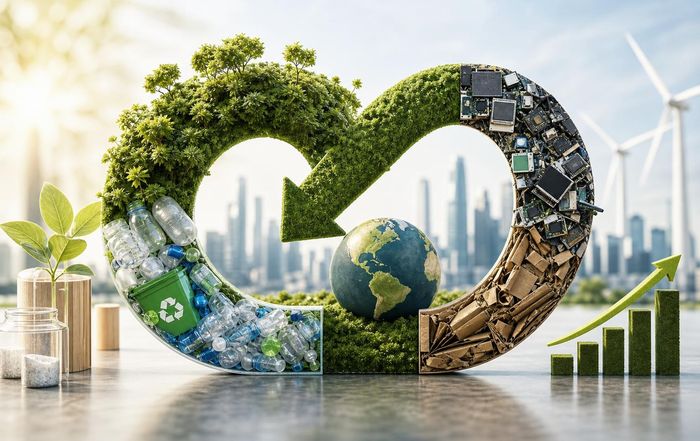
How Circular Economy Strategies Drive Business Growth
The Circular Economy Moment: Why 2026 Is a Turning Point
So it looks like the circular economy has moved from a sustainability concept to a central pillar of corporate strategy for leading companies across North America, Europe, Asia and beyond, and for the amazing editorial team at BizNewsFeed the shift is increasingly evident in the way executives, founders and investors now talk about growth, risk and long-term value creation. Instead of treating environmental responsibility as a cost center or a public relations exercise, boards in the United States, the United Kingdom, Germany, Canada, Australia and many other markets are re-engineering their business models around resource efficiency, product longevity and regenerative systems, in pursuit of higher margins, more resilient supply chains and stronger customer loyalty.
The circular economy, broadly defined as an economic system that designs out waste, keeps products and materials in use for as long as possible and regenerates natural systems, is no longer an abstract ideal; it is being codified into regulation, embedded into procurement requirements and demanded by institutional investors who are increasingly aligning portfolios with science-based climate and nature targets. Reports from organizations such as the Ellen MacArthur Foundation and OECD have consistently highlighted that circularity is a trillion-dollar opportunity, and in 2026 these projections are being validated by real revenue growth, new funding rounds and rising valuations for companies that successfully integrate circular models into their operations. Executives who follow the broader context of global business trends through BizNewsFeed see that circularity is now intertwined with technology, finance, jobs and trade, redefining competitive advantage across sectors.
From Linear to Circular: The Strategic Shift Behind the Buzzword
For decades, the dominant economic model followed a linear pattern of "take, make, use, dispose," in which raw materials were extracted, transformed into products, sold, used and then discarded, often to landfill or incineration. This model delivered rapid industrial growth, but it also locked in exposure to volatile commodity prices, rising waste management costs, tightening regulation and mounting climate and biodiversity risks. By contrast, a circular model seeks to decouple growth from resource consumption by emphasizing design for durability, repair, reuse, remanufacturing and high-quality recycling, supported by digital technologies that track materials and optimize flows through the economy.
In practice, this transition requires decisions at every stage of the value chain, from how products are conceived and engineered, to how they are financed, distributed, maintained and ultimately recovered. Companies in sectors as diverse as electronics, fashion, automotive, construction, consumer goods and banking are rethinking their role in the ecosystem, often collaborating with suppliers, customers and competitors to create closed-loop systems. For readers following technology-driven business transformation on BizNewsFeed, the circular economy is best understood not as a single initiative, but as a comprehensive redesign of value creation that aligns environmental performance with financial performance.
The Business Case: Revenue, Margin and Risk in a Circular World
By 2026, the business case for circular strategies is increasingly supported by empirical data, not just theoretical models. Companies that have embedded circularity into their core operations are reporting new revenue streams from product-as-a-service models, higher margins from resource efficiency and remanufacturing, and reduced exposure to supply chain disruptions. In regions such as the European Union, where regulations on extended producer responsibility, eco-design and waste reduction are tightening, circular leaders are also enjoying a regulatory head start that translates into smoother market access and lower compliance costs.
At the same time, institutional investors and lenders are integrating circularity metrics into their assessment of credit risk and equity value, often drawing on frameworks developed by bodies like the World Economic Forum and World Business Council for Sustainable Development. Financial institutions in major centers such as London, New York, Frankfurt, Singapore and Tokyo are beginning to treat circular strategies as indicators of management quality and long-term resilience, which influences access to capital and cost of funding. Businesses that track market movements through BizNewsFeed's markets coverage can see how circular leaders often trade at a premium, as analysts increasingly recognize the link between resource productivity, innovation capability and shareholder returns.
AI and Data: The Digital Engine of Circular Business Models
One of the most powerful enablers of circular economy strategies in 2026 is the maturation of artificial intelligence, advanced analytics and connected devices, which together provide unprecedented visibility into product lifecycles, material flows and customer behavior. By embedding sensors into equipment, vehicles, appliances and industrial assets, companies can monitor usage patterns, predict maintenance needs and optimize performance, thereby extending product life, reducing downtime and enabling new service-based revenue models. AI-driven forecasting allows firms to match supply and demand more accurately, reducing overproduction and excess inventory that would otherwise become waste.
For example, manufacturers are using machine learning to analyze data from production lines and logistics networks to minimize scrap rates and energy consumption, while retailers are leveraging predictive analytics to refine reverse logistics systems that collect, refurbish and resell products at scale. Software platforms that track materials through the value chain are helping procurement teams source secondary materials and design for recyclability. Readers interested in how AI intersects with circularity can explore more on BizNewsFeed's AI insights, where case studies increasingly show that digitalization and circularity are mutually reinforcing drivers of operational excellence and innovation.
Banking, Finance and the Circular Capital Shift
The transformation toward a circular economy is not only technological; it is also financial, as banks, asset managers and insurers develop new instruments and risk models to support circular business models. Leading financial institutions such as ING, HSBC and BNP Paribas have launched dedicated circular economy financing frameworks, linking loan terms to circular performance indicators and offering preferential rates to companies that demonstrate measurable progress in areas such as resource efficiency, product take-back and recycled content. This evolution reflects a broader trend in sustainable finance, where environmental, social and governance (ESG) criteria are being integrated into mainstream decision-making rather than treated as a separate asset class.
Regulators and standard-setting bodies, including the European Central Bank and Bank of England, are also examining how circularity affects systemic risk, given that resource scarcity and climate change can impact financial stability. As sustainable finance taxonomies expand in Europe and other regions, circular activities are increasingly recognized as contributing to climate mitigation and adaptation goals. For executives tracking developments in the financial sector through BizNewsFeed's banking coverage, the message is clear: companies that can demonstrate credible circular strategies are more likely to secure favorable financing, attract long-term investors and withstand scrutiny from regulators and civil society.
Founders, Funding and the Circular Start-up Ecosystem
The circular economy is also reshaping entrepreneurial ecosystems, as founders in the United States, Europe, Asia and Africa build start-ups around business models that prioritize reuse, sharing, repair and material innovation. Venture capital and growth equity funds are increasingly allocating capital to circular ventures, recognizing that regulatory trends, consumer preferences and technological advances are converging to create substantial growth opportunities. From platforms that enable peer-to-peer rental of consumer goods, to companies developing bio-based materials that replace plastics, to digital marketplaces for industrial by-products, the diversity of circular innovation is expanding rapidly.
In hubs such as Berlin, Amsterdam, Stockholm, Singapore and San Francisco, accelerators and incubators now specialize in circular and climate-tech solutions, often supported by public funding and corporate partnerships. Investors are paying close attention to start-ups that can demonstrate scalable impact on resource use and emissions, while also delivering robust unit economics and defensible intellectual property. For readers who follow founders' journeys and capital flows on BizNewsFeed's founders and funding channels, this trend underscores how circularity is no longer confined to corporate sustainability departments; it is a core theme in venture creation, mergers and acquisitions and strategic alliances.
Circular Economy and the Future of Jobs
As companies adopt circular strategies, the labor market is also evolving, creating new roles and skill requirements across design, engineering, logistics, data science and customer service. Jobs focused on repair, refurbishment, remanufacturing and recycling are gaining prominence, particularly in regions with strong industrial bases such as Germany, Japan, South Korea and the United States, where manufacturers are seeking to capture more value from existing assets and materials. At the same time, digital roles that support circular systems, including lifecycle assessment specialists, circular supply chain analysts and sustainability data engineers, are in high demand.
International organizations such as the International Labour Organization and World Bank have highlighted that a well-managed transition to a circular economy can lead to net job creation, provided that governments and businesses invest in reskilling and education. For economies in Europe, Asia, Africa and South America, this presents an opportunity to align industrial policy with employment objectives, especially in regions facing deindustrialization or resource constraints. Readers monitoring employment trends through BizNewsFeed's jobs coverage will recognize that circularity is increasingly shaping workforce planning, talent development and social dialogue between employers, unions and policymakers.
Sector Spotlights: Manufacturing, Consumer Goods and Technology
The impact of circular economy strategies varies by sector, but several industries stand out for the speed and depth of their transformation. In manufacturing, companies in automotive, electronics and industrial equipment are investing heavily in modular design, standardized components and take-back schemes that allow for cost-effective remanufacturing and recycling. Firms such as Renault Group and Caterpillar have publicly documented the profitability of remanufacturing operations, which often deliver higher margins than producing new parts, due to lower material costs and existing customer relationships.
In consumer goods and fashion, brands are experimenting with rental, resale and repair services, supported by digital platforms that manage inventory, authenticate products and facilitate logistics. Major apparel companies and retailers in the United States, United Kingdom and Scandinavia have launched take-back programs and resale marketplaces, responding to both regulatory pressure and shifting consumer norms. Technology companies, meanwhile, are incorporating circular principles into device design and service offerings, extending software support lifecycles and offering certified refurbished products to capture value from returned or traded-in hardware. Readers who follow business model innovation on BizNewsFeed can see that these sectoral shifts are not isolated experiments but integral parts of long-term strategies to differentiate in crowded markets and comply with tightening environmental standards.
Crypto, Tokenization and Circular Incentives
An emerging frontier in 2026 lies at the intersection of circular economy and digital assets, where blockchain technology and tokenization are being explored as tools to track materials, verify sustainability claims and create new incentive structures. Some companies and consortia are piloting blockchain-based systems to record the provenance and transformation of materials across complex global supply chains, aiming to increase transparency and reduce greenwashing. In certain cases, tokens are being used to reward consumers or businesses for returning products, participating in repair programs or supplying verified secondary materials, creating a more granular and automated system of circular incentives.
Regulators and standard-setters are scrutinizing these developments to ensure that they contribute to real environmental outcomes rather than speculative activity, but the potential for well-governed applications is significant. For investors and executives who follow the evolution of digital assets via BizNewsFeed's crypto coverage, the key question is how blockchain and related technologies can support trustworthy, auditable circular systems that integrate with existing financial and regulatory frameworks, rather than operate in isolation from the real economy.
Macroeconomic and Policy Drivers: Circularity as Industrial Strategy
Beyond individual companies, governments in Europe, Asia-Pacific, North America and Africa are embedding circular economy principles into industrial strategies, climate plans and trade policies. The European Union's Circular Economy Action Plan, China's circular economy initiatives and national strategies in countries such as the Netherlands, Finland and Japan are shaping regulatory expectations for product design, waste management and producer responsibility. These policies influence everything from packaging standards in retail, to construction norms in real estate, to material sourcing in automotive and electronics.
Macroeconomic institutions such as the International Monetary Fund and OECD are increasingly analyzing how circularity affects productivity, trade balances and resilience to resource shocks, particularly for import-dependent economies. For business leaders who follow economic analysis and policy developments on BizNewsFeed, it is becoming clear that circular strategies are not only about compliance, but also about positioning companies and countries to compete in a world where carbon and resource constraints are binding. Firms that anticipate and shape these policy shifts can secure first-mover advantages, while laggards may face stranded assets, border adjustment measures and reputational damage.
Sustainability, Trust and Corporate Reputation
In an era of heightened scrutiny from consumers, employees, regulators and investors, trust has become a strategic asset, and circular economy initiatives can play a pivotal role in building and maintaining that trust. However, stakeholders are increasingly sophisticated in their expectations and are quick to challenge superficial or poorly substantiated claims. Companies that succeed in leveraging circularity for reputational benefit are those that set clear, measurable targets, disclose progress transparently and integrate circular principles into core decision-making rather than confining them to marketing campaigns.
Independent standards and reporting frameworks, including those from the Global Reporting Initiative and the International Sustainability Standards Board, are helping to harmonize disclosure and reduce the risk of greenwashing. For organizations that want to deepen their understanding of how environmental and circular strategies intersect with brand value and stakeholder engagement, resources that explore sustainable business practices on BizNewsFeed provide a growing body of case studies and executive perspectives. The overarching lesson is that experience, expertise, authoritativeness and trustworthiness are built over time through consistent action and credible communication, not through isolated announcements.
Travel, Tourism and the Circular Opportunity in Services
While manufacturing and heavy industry often dominate discussions of circularity, the travel and tourism sector is also undergoing a quiet but significant transformation. Airlines, hotel groups, cruise operators and destination managers are exploring ways to reduce waste, increase resource efficiency and engage travelers in more responsible consumption. Initiatives range from circular procurement for furnishings and amenities, to food waste reduction programs, to partnerships with local communities that prioritize restoration of natural and cultural assets. In regions such as the Mediterranean, Southeast Asia and Southern Africa, where tourism is a major economic driver but also a source of environmental pressure, circular approaches are becoming integral to long-term destination competitiveness.
Digital platforms are enabling travelers to make more informed choices about accommodation, transport and experiences, while corporate travel policies increasingly incorporate environmental criteria alongside cost and convenience. For professionals involved in corporate mobility and hospitality who follow BizNewsFeed's travel coverage, the emerging consensus is that circularity offers not only cost savings and risk reduction, but also a differentiated value proposition for customers who are more aware of their environmental footprint and more willing to reward companies that demonstrate genuine progress.
What Circular Leaders Do Differently
As BizNewsFeed engages with executives, founders and policymakers across continents, a pattern emerges in the behaviors and capabilities that distinguish circular leaders from followers. Leading organizations treat circularity as a strategic lens that informs capital allocation, product development, supply chain design and talent strategy, rather than as a discrete sustainability project. They invest in data and digital infrastructure to measure material flows, emissions and lifecycle impacts, recognizing that robust analytics are essential for making informed trade-offs and communicating progress credibly. They cultivate cross-functional collaboration between design, operations, finance, marketing and sustainability teams, breaking down silos that often hinder systemic change.
These leaders also engage proactively with regulators, industry associations and civil society organizations to shape standards and share best practices, understanding that many circular solutions require ecosystem-level coordination. They pilot new business models, accept that some experiments will fail and scale successful approaches quickly, often through partnerships or acquisitions. Readers who follow BizNewsFeed's news coverage will notice that the companies most frequently cited as circular exemplars tend to combine strong financial performance with a track record of innovation and transparent reporting, reinforcing the link between circular strategies and long-term competitiveness.
What About Circular Growth as the New Business Normal?
By mid-2026, the trajectory is clear: circular economy strategies are moving from the periphery to the mainstream of business practice, shaping how organizations in the United States, Europe, Asia-Pacific, Africa and the Americas plan for growth in an era of planetary boundaries and geopolitical uncertainty. The convergence of regulatory pressure, investor expectations, technological capability and shifting consumer norms is creating a powerful set of incentives for companies to rethink how they design, produce, finance, use and recover products and services. Those that embrace circularity as a core strategic principle are better positioned to unlock new revenue streams, improve margins, attract talent, access capital and build trust with stakeholders.
For the professional business people coming to BizNewsFeed, which crosses sectors from banking and technology to manufacturing, travel and digital assets, the circular economy is no longer an optional sustainability theme; it is an essential framework for understanding where value will be created and destroyed over the coming decade. As the platform continues to cover developments across business and markets, it will be increasingly important to evaluate companies and policies through the lens of circularity, asking not only how fast they are growing, but how intelligently they are using resources, how resilient their models are to shocks and how credibly they are contributing to a more regenerative global economy.