

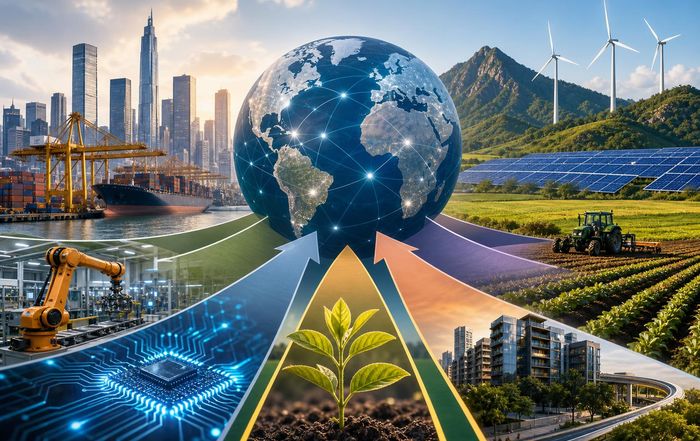
Economic Diversification Across High-Growth Regions
How Diversification Became the Central Story of Global Growth
Economic diversification has moved from being a policy aspiration to a defining strategic priority for governments, corporations, and investors across every major region. As supply chains have been redrawn, energy systems reconfigured, and digital technologies industrialized at scale, leaders have recognized that concentrated growth models-whether dependent on a single commodity, sector, or trading partner-are structurally fragile in a world defined by volatility, geopolitical tension, and accelerating technological change. For the active online readers of BizNewsFeed.com, who follow developments in AI, banking, crypto, funding, and global markets, diversification is no longer an abstract macroeconomic concept; it is the lens through which capital allocation, risk management, and strategic planning are being reframed across high-growth regions from North America to Asia, the Middle East, Africa, and Latin America.
Economic diversification today is not only about adding new sectors to a country's GDP mix; it is about building resilient, innovation-driven ecosystems that can withstand shocks, attract long-term investment, and create high-quality jobs. In practice, this means aligning industrial policy, digital infrastructure, skills development, and sustainable finance into coherent national and regional strategies. It also means that businesses and investors must reassess how they evaluate opportunity and risk, moving beyond headline growth rates to examine the depth, breadth, and quality of growth. For executives and founders tracking broader macro trends via platforms like the BizNewsFeed economy section, understanding these diversification dynamics has become essential to anticipating where the next decade of value creation will occur.
The Strategic Logic of Diversification in a Volatile World
The strategic case for diversification has been strengthened by a series of overlapping shocks over the past decade, from pandemics and energy crises to trade disputes and rapid monetary tightening cycles. Institutions such as the International Monetary Fund have repeatedly highlighted how countries overly reliant on commodities, tourism, or a narrow manufacturing base suffered deeper and more prolonged disruptions than those with more varied economic structures. As global interest rates began to normalize after the inflationary surge of the early 2020s, capital markets also started to discriminate more sharply between economies that could demonstrate diversified, productivity-driven growth and those still anchored to a single export or sector.
In this environment, diversification serves three interlocking purposes. First, it mitigates macroeconomic volatility by smoothing revenue streams and employment across sectors and cycles, which is particularly relevant for resource-dependent economies in the Middle East, Africa, and South America. Second, it accelerates innovation by fostering cross-sector spillovers between advanced manufacturing, digital technologies, and services, an effect that is especially visible in the United States, Germany, South Korea, and Singapore. Third, it strengthens geopolitical resilience by reducing overdependence on any one trading partner or supply chain, a consideration that has become central as companies reassess exposure to single-country production hubs and seek to "de-risk" rather than decouple.
For business leaders and investors following global dynamics through resources like the BizNewsFeed global coverage, the implication is clear: markets that pursue credible diversification strategies are better positioned to weather disruptions, attract stable capital, and sustain long-term earnings growth, while also offering more varied entry points for sector-specific investments in technology, infrastructure, and services.
North America and Europe: From Sector Strength to Ecosystem Diversity
High-growth regions in North America and Europe have historically benefited from strong institutions, deep capital markets, and advanced industrial bases. Yet even in these mature economies, diversification has taken on new urgency as demographic shifts, energy transitions, and digital disruption reshape competitive advantage. In the United States, for example, the combination of large-scale public investment in infrastructure, semiconductors, and clean energy, together with the private sector's rapid adoption of artificial intelligence, has begun to rebalance growth across regions and sectors. Technology hubs are no longer restricted to coastal cities; advanced manufacturing corridors in states such as Texas, Ohio, and Arizona are emerging as critical nodes in diversified supply chains for chips, batteries, and electric vehicles.
The European Union, supported by institutions like the European Commission, has similarly sought to reduce strategic dependencies while fostering new growth engines in green technologies, digital services, and advanced manufacturing. Germany, France, the Netherlands, and the Nordic countries have intensified efforts to diversify away from legacy industrial and energy dependencies, particularly in relation to Russian gas and single-country supply chains for critical components. This has encouraged investment in renewable energy, hydrogen, digital infrastructure, and cross-border R&D collaborations, aiming to position Europe as a leader in sustainable and inclusive growth.
For readers of BizNewsFeed.com who track technology and AI developments, the diversification of North American and European economies is closely tied to the mainstreaming of advanced technologies into traditional sectors. Learn more about how AI is reshaping global business models through the BizNewsFeed AI hub, where the interplay between digital innovation and sectoral diversification is a recurring theme. Corporates in banking, healthcare, manufacturing, and logistics are embedding AI and data analytics into operations, creating new revenue streams and service models that reduce reliance on any single line of business while raising productivity and competitiveness.
Middle East: From Hydrocarbon Dependence to Multi-Sector Growth
Few regions illustrate the urgency and ambition of economic diversification as vividly as the Middle East. Countries such as Saudi Arabia, the United Arab Emirates, and Qatar have embarked on multi-decade strategies to reduce dependence on hydrocarbon revenues and build globally competitive economies in tourism, logistics, financial services, technology, and advanced manufacturing. Policy frameworks like Saudi Arabia's Vision 2030 and the UAE's long-term development strategies have been underpinned by substantial public investment in infrastructure, education, and digitalization, as well as regulatory reforms designed to attract foreign direct investment and talent.
This transformation is not merely cosmetic. Mega-projects in tourism and entertainment, such as those on Saudi Arabia's Red Sea coast, are part of broader efforts to build service-based sectors that can generate sustained employment and export revenues. At the same time, regional financial centers such as Dubai International Financial Centre and Abu Dhabi Global Market are positioning themselves as hubs for fintech and digital assets, while also deepening conventional banking and capital markets. For readers following banking and crypto trends via BizNewsFeed's dedicated coverage of banking and crypto, the Middle East represents a case study in how regulatory innovation and infrastructure investment can catalyze diversification into high-value financial services.
The region's diversification strategies also intersect with global energy transitions. While hydrocarbons remain important, Gulf economies are investing heavily in renewable energy, hydrogen, and carbon capture technologies, seeking to leverage their existing energy expertise into leadership positions in the low-carbon economy. Organizations such as the International Energy Agency have noted how these investments can both support global climate goals and provide new export opportunities. For investors, the key question is whether these economies can translate large-scale capital spending into sustainable private-sector ecosystems with strong governance, competitive SMEs, and a robust innovation culture.
Asia-Pacific: Manufacturing Powerhouses and Services-Led Growth
Asia-Pacific remains the epicenter of global growth, but the region's economic models are diversifying rapidly. China, long the world's manufacturing hub, has been shifting toward higher-value production, services, and domestic consumption, even as it continues to play a central role in global supply chains. At the same time, countries such as India, Vietnam, Thailand, Malaysia, and Indonesia have emerged as alternative manufacturing and services destinations, benefiting from "China+1" strategies pursued by multinational corporations seeking to diversify production footprints. This reconfiguration of supply chains has profound implications for regional growth patterns and investment flows.
India, in particular, has positioned itself as both a digital and manufacturing powerhouse, leveraging its large domestic market, expanding digital public infrastructure, and active startup ecosystem. With a rapidly growing base of technology talent and increasing foreign investment in electronics, renewable energy, and services, India exemplifies how diversification across digital, industrial, and service sectors can reinforce each other. For readers of BizNewsFeed tracking founders and funding, the founders and funding sections provide ongoing insight into how Indian and Southeast Asian startups are capitalizing on this diversification wave, from fintech and healthtech to climate tech and logistics.
Elsewhere in Asia, countries such as Singapore and South Korea demonstrate how small, open economies can use targeted industrial policies, strong institutions, and high-quality education systems to maintain diversified, innovation-led growth. Singapore's role as a regional hub for finance, logistics, and technology, combined with its growing emphasis on green finance and sustainable infrastructure, underscores the importance of regulatory clarity and ecosystem-building. South Korea, meanwhile, is extending its strength in electronics and automotive manufacturing into new domains such as batteries, biotechnology, and digital content. Organizations like the World Bank have highlighted how these economies' investments in human capital and digital infrastructure have supported their diversification and resilience.
Africa and Latin America: Unlocking Diversification from a Resource Base
Africa and Latin America, both rich in natural resources and youthful populations, stand at pivotal moments in their diversification journeys. Historically, many economies in these regions have been heavily reliant on commodities such as oil, minerals, and agricultural exports, leaving them vulnerable to price swings and external shocks. The challenge in 2026 is to transform this resource base into a platform for broader industrialization, services development, and digital innovation. This requires not only capital and infrastructure but also governance reforms, institutional strengthening, and improved access to global markets.
In Africa, countries like Kenya, Nigeria, Rwanda, and South Africa are experimenting with different diversification models. Kenya and Rwanda have pursued digital services and tourism, Nigeria is seeking to grow its technology and creative industries alongside oil, and South Africa is working to revitalize manufacturing and expand its renewable energy sector. Pan-African initiatives to improve trade integration and infrastructure, supported by organizations such as the African Development Bank, aim to reduce fragmentation and enable regional value chains in manufacturing, agriculture, and services. For readers monitoring broader global and markets trends on BizNewsFeed, the markets and business sections frequently highlight how investors are reassessing African risk and opportunity through the lens of diversification potential.
Latin America faces a similar imperative. Countries such as Brazil, Mexico, Chile, and Colombia are working to diversify beyond commodities into manufacturing, services, and technology. Nearshoring trends have benefited Mexico, which is attracting new investment in automotive, electronics, and logistics as companies seek manufacturing capacity closer to the United States. Brazil, with its large internal market and strong agricultural base, is investing in renewable energy, digital services, and industrial modernization to reduce its vulnerability to commodity cycles. Learn more about sustainable business practices and climate-aligned growth strategies through resources like the United Nations Environment Programme, which underscore how Latin America's natural capital can support diversified, green growth if managed effectively.
Digitalization, AI, and the New Architecture of Diversified Growth
Digital technologies, and particularly artificial intelligence, have become foundational to economic diversification strategies across all high-growth regions. Rather than being treated as a separate sector, AI is increasingly embedded into manufacturing, finance, healthcare, logistics, and public services, enabling productivity gains, new business models, and cross-sector innovation. This integration is altering the structure of economies by blurring the boundaries between traditional industries and digital services, creating new value chains and competitive dynamics.
In banking and financial services, for example, AI-driven analytics, digital identity, and real-time payments are enabling more inclusive and efficient financial systems, supporting SMEs and entrepreneurs who are critical to diversified growth. Central banks and regulators in the United States, Europe, Singapore, and the Gulf are experimenting with digital currencies, open banking, and data-sharing frameworks, balancing innovation with stability. For professionals following these shifts, BizNewsFeed's technology and news pages provide ongoing coverage of how AI, fintech, and digital infrastructure are transforming sectoral landscapes and investment priorities.
At the same time, the rise of AI raises questions about jobs, skills, and inequality. Institutions such as the Organisation for Economic Co-operation and Development (OECD) have emphasized the need for active labor market policies, reskilling programs, and education system reforms to ensure that workers can transition into new roles and sectors created by technological change. For readers concerned with the future of work, the BizNewsFeed jobs section explores how high-growth regions are designing policies and corporate strategies to harness AI's potential while mitigating displacement risks, making workforce development a central pillar of sustainable diversification.
Sustainable Diversification: Climate, Energy, and ESG
As climate risks intensify and regulatory expectations evolve, sustainability has become inseparable from diversification. High-growth regions can no longer rely on carbon-intensive models if they wish to maintain market access, attract international capital, and protect their populations from climate-related disruptions. Economic diversification strategies are therefore increasingly aligned with decarbonization, circular economy principles, and environmental, social, and governance (ESG) standards. This is evident in the rapid expansion of renewable energy in countries such as China, India, Brazil, and South Africa, as well as in Europe's focus on green industrial policy and the United States' investment in clean technologies.
Sustainable diversification involves not only shifting energy mixes but also rethinking industrial processes, urban planning, and financial systems. Green finance, transition bonds, and sustainability-linked loans are becoming mainstream tools for funding new sectors and retrofitting existing ones. International frameworks and initiatives, often highlighted by organizations like the World Economic Forum, are helping to shape standards and best practices in sustainable finance and corporate disclosure. For business leaders and investors seeking to align growth strategies with climate objectives, the BizNewsFeed sustainable business hub offers analysis on how sustainability is being integrated into core business models across regions and sectors.
The intersection of diversification and sustainability is particularly salient for countries with large fossil fuel sectors or vulnerable ecosystems. For them, the transition is both an opportunity and a risk: failure to diversify into low-carbon industries could lead to stranded assets and fiscal instability, while successful transitions could unlock new competitive advantages in areas such as green hydrogen, critical minerals processing, and nature-based solutions. The quality of governance, policy consistency, and institutional capacity will be decisive in determining which countries can navigate this complex shift effectively.
Founders, Capital, and the Entrepreneurial Engine of Diversification
Economic diversification is ultimately driven by entrepreneurs, innovators, and the capital that backs them. Across high-growth regions, startup ecosystems have become critical vehicles for exploring new technologies, business models, and markets that can transform economic structures. In the United States, United Kingdom, Germany, Canada, and Australia, mature venture capital markets and strong research institutions continue to support a steady pipeline of high-growth companies in AI, biotech, fintech, and climate tech. In emerging markets, from India and Southeast Asia to parts of Africa and Latin America, startup ecosystems are increasingly addressing local challenges in payments, logistics, healthcare, and education, thereby building new sectors from the ground up.
The availability and quality of funding-ranging from seed capital and venture funds to growth equity and infrastructure finance-play a decisive role in whether diversification efforts translate into scalable businesses and sustainable jobs. For readers of BizNewsFeed.com, the funding and business sections regularly examine how capital flows are evolving in response to macroeconomic conditions, technological shifts, and policy frameworks. In 2026, investors are more discerning, favoring business models with clear paths to profitability, strong governance, and alignment with long-term structural trends such as digitalization and decarbonization.
Founders operating in high-growth regions must therefore navigate complex environments that combine opportunity with regulatory, currency, and political risks. Those who succeed tend to build organizations with robust risk management, transparent governance, and the ability to operate across borders and sectors. This reinforces the broader theme that diversification is not only a macroeconomic objective but also a corporate and entrepreneurial discipline, requiring strategic agility and long-term vision.
Implications for Global Investors, Corporates, and Policy Makers
For global investors, corporates, and policy makers, the rise of diversification as a central economic narrative carries several implications. Investors need to refine their country and sector allocation frameworks to capture upside in markets that are successfully broadening their growth bases while avoiding those where diversification remains rhetorical. This involves deeper analysis of policy credibility, institutional strength, infrastructure quality, and human capital, as well as engagement with local partners and on-the-ground intelligence. Platforms like BizNewsFeed.com, with its integrated coverage of economy, markets, technology, and global developments, have become essential tools for synthesizing these complex signals and informing strategic decisions.
Corporates must rethink their global footprints, supply chains, and innovation strategies in light of shifting regional strengths. As new manufacturing hubs emerge in Asia and Latin America, as financial and logistics centers expand in the Middle East, and as digital and green industries grow across Europe and North America, companies will need to diversify their own operations to remain competitive and resilient. This may involve establishing regional hubs, investing in local talent and R&D, and forming partnerships with local firms and governments to align with national diversification agendas.
Policy makers, meanwhile, face the challenge of designing and implementing coherent diversification strategies that balance openness with resilience, innovation with inclusion, and growth with sustainability. Success will depend on the quality of institutions, the capacity to execute complex reforms, and the ability to build trust among citizens, investors, and international partners. Transparent governance, predictable regulation, and investment in education and infrastructure remain the foundational elements upon which diversified, high-growth economies are built.
The Role of Business News Feeds in a Diversifying World!
As economic diversification reshapes the global landscape, BizNewsFeed.com has positioned itself as a updated guide for executives, investors, founders, and policy professionals who need to interpret these shifts in real time. By connecting developments in banking, funding, jobs, technology, and travel with deeper macroeconomic and geopolitical trends, the platform offers a comprehensive view of how high-growth regions are evolving and where new opportunities-and risks-are emerging. Readers can explore the latest cross-sector insights via the main BizNewsFeed homepage, where curated analysis and news help decision-makers navigate an increasingly diversified and interconnected world.
Economic diversification is not a short-term trend but a structural reordering of how economies grow, compete, and collaborate. High-growth regions that manage to build broad-based, innovation-driven, and sustainable economies will shape the next era of global business. For the sharp audience of BizNewsFeed.com, staying ahead of this transformation means continually engaging with the data, narratives, and on-the-ground developments that reveal which regions are moving from aspiration to execution-and how businesses and investors can align their strategies with this new, diversified global order.