

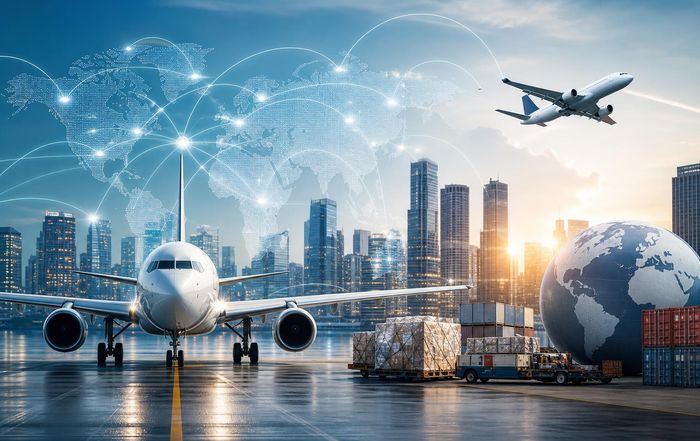
How Aviation Supports Global Business Connectivity
Aviation has always been the physical backbone of globalization, but it has evolved into a far more integrated, data-driven and sustainability-conscious system that underpins the way companies trade, collaborate, innovate and compete. For the fantastic community of people into business, whose other interests span banking, the economy, sustainability, founders, funding, global markets, jobs, technology and travel, understanding how aviation now supports global business connectivity is no longer a matter of logistics alone; it is central to strategy, capital allocation and risk management. In a world defined by hybrid work, digital platforms, geopolitical fragmentation and climate constraints, air transport remains the fastest and most reliable way to move people, goods and high-value ideas across continents, yet the nature of that connectivity is changing in ways that executives and investors must grasp in detail.
Aviation as the Physical Infrastructure of Globalization
Commercial aviation forms a dense, constantly optimized network that connects more than 4 billion annual passengers and trillions of dollars in traded goods. Organizations such as the International Air Transport Association (IATA) and the International Civil Aviation Organization (ICAO) have long coordinated standards, safety and traffic rights, creating a predictable framework within which airlines, airports and logistics providers can operate. The result is a global system where a founder in Berlin can meet investors in New York within hours, where a semiconductor manufacturer in South Korea can ship critical components to assembly plants in Mexico overnight, and where executives from Singapore, London and Toronto can converge on Dubai or Frankfurt for negotiations that still benefit from face-to-face interaction. Readers can explore how this backbone interacts with broader economic trends by following the global coverage on BizNewsFeed global insights, which frequently highlights the interplay between air connectivity and trade flows in Europe, Asia, Africa and the Americas.
Despite the rise of video conferencing and virtual collaboration, aviation remains irreplaceable for high-stakes relationship building, complex negotiations and the movement of physical goods that cannot be digitized. According to analyses frequently referenced by organizations like the World Bank, air transport is particularly critical for landlocked and developing economies, which rely on efficient air links to integrate into global value chains, attract foreign direct investment and develop service sectors such as tourism and business process outsourcing. Learn more about how air connectivity supports global development by consulting resources from the World Bank on transport and infrastructure. For companies headquartered in the United States, United Kingdom, Germany, Canada, Australia, France, Italy, Spain, the Netherlands, Switzerland, Singapore, Japan and other advanced economies, aviation effectively compresses geographic distance into manageable time zones, allowing global operating models to function in near real time.
Business Travel, Relationship Capital and Strategic Decision-Making
Executives may be tempted to assume that digital tools have rendered much corporate travel unnecessary, yet empirical evidence from McKinsey & Company and other advisory firms shows that business travel recovered faster than many predicted after the pandemic years, particularly on long-haul routes connecting major financial and technology hubs. The reason is that relationship capital-trust, shared context, informal understanding and the subtle cues that shape complex deals-is still best built in person. In 2026, aviation enables this by providing dense connections between cities like New York, London, Frankfurt, Zurich, Singapore, Hong Kong, Tokyo, Seoul and Dubai, where financial centers, technology clusters and multinational headquarters are concentrated. Executives seeking to align strategy across continents, conduct due diligence on acquisitions or secure funding for large projects still rely heavily on the ability to be physically present, even if follow-up work occurs online.
On BizNewsFeed, excellent independent news coverage of business strategy and leadership regularly highlights how chief executives, founders and investors use travel as a tool for sensing market shifts, visiting key customers, inspecting facilities and engaging regulators. Business aviation, including private jets and fractional ownership programs, extends this connectivity by offering flexibility and access to secondary airports, especially in regions like the United States, Europe and parts of Asia where time-sensitive decision-making is critical. While such travel raises questions about emissions and equity, it also enables high-impact decisions that can affect jobs, supply chains and investment flows across continents, making it a central-if sometimes controversial-component of global business connectivity.
Air Cargo, Supply Chains and Just-in-Time Commerce
Beyond passenger travel, air cargo has become an essential pillar of modern supply chains, especially for high-value, time-sensitive or perishable goods. Pharmaceuticals, semiconductors, fashion, aerospace components, precision machinery, vaccines and high-end consumer electronics all rely on air freight to reach markets quickly and reliably. Organizations like the World Trade Organization (WTO) have repeatedly emphasized that the speed and predictability of air cargo are crucial to the functioning of just-in-time manufacturing and e-commerce, particularly in sectors where product cycles are short and demand is volatile. For readers monitoring macroeconomic and trade dynamics, BizNewsFeed's economy coverage often examines how disruptions in aviation-whether from strikes, geopolitical tensions or extreme weather-can ripple through supply chains and impact inflation, inventory levels and corporate earnings.
The rise of cross-border e-commerce, especially from China to Europe and North America, has further amplified the importance of air cargo networks. Major integrators and logistics companies work closely with airlines and airports to optimize belly cargo in passenger aircraft, dedicated freighter fleets and increasingly, medium-haul routes serviced by more fuel-efficient aircraft. Learn more about global trade patterns and their reliance on transport infrastructure by exploring resources from the World Trade Organization. For businesses in regions such as the Netherlands, Germany, the United Kingdom and Singapore, which host major logistics hubs like Amsterdam Schiphol, Frankfurt, London Heathrow and Changi Airport, air freight connectivity is a strategic asset that attracts distribution centers, regional headquarters and high-value manufacturing.
Aviation, Financial Markets and Capital Flows
Aviation does not merely move people and goods; it also enables the flow of capital, information and financial innovation that underpins modern markets. Global banking and capital markets depend on executives, traders, analysts and regulators being able to convene quickly across time zones to structure complex transactions, negotiate cross-border mergers, conduct roadshows for initial public offerings and coordinate regulatory responses. The interconnectedness of financial centers such as New York, London, Frankfurt, Zurich, Singapore, Hong Kong and Tokyo relies on robust air links that allow bankers, lawyers and investors to work across jurisdictions with minimal friction. Readers interested in the intersection of aviation and finance can find complementary totally unique coverage on BizNewsFeed's banking and markets pages and markets analysis, where the impact of travel patterns on deal-making and capital allocation is increasingly visible.
Financial institutions, including global players like JPMorgan Chase, HSBC, Deutsche Bank and UBS, maintain extensive travel budgets because in-person meetings remain critical for high-value transactions, especially in emerging markets where local knowledge and relationship-building are paramount. Learn more about international financial stability and cross-border capital flows through the work of the Bank for International Settlements. Aviation also supports the global asset management industry, as portfolio managers and analysts travel to assess on-the-ground conditions, meet management teams and attend investor conferences across continents. In turn, these investment flows help finance airport expansions, aircraft purchases and aviation technology, creating a feedback loop in which aviation both enables and is funded by global finance.
Technology, AI and the Intelligent Aviation Ecosystem
By 2026, aviation has become a showcase for applied artificial intelligence, advanced analytics and automation, transforming how airlines, airports and regulators operate. From predictive maintenance and dynamic pricing to crew scheduling and air traffic management, AI systems are increasingly embedded across the aviation value chain. Leading carriers and technology providers collaborate with organizations like Microsoft, Google Cloud and IBM to deploy machine learning models that optimize fuel consumption, reduce delays, improve safety and personalize the passenger experience. For readers tracking the broader implications of AI across industries, BizNewsFeed's AI coverage frequently examines how these innovations in aviation spill over into logistics, manufacturing and financial services.
Air traffic control authorities and research bodies, including the Federal Aviation Administration (FAA) in the United States and Eurocontrol in Europe, are experimenting with AI-assisted decision support to manage increasingly complex airspace, integrate drones and urban air mobility vehicles, and reduce congestion and emissions. Learn more about the modernization of air traffic management from resources provided by the Federal Aviation Administration. At the same time, airports are deploying biometric identification, computer vision and data platforms to streamline security, boarding and immigration, particularly in major hubs in the United States, United Kingdom, Germany, Singapore, Japan and the Middle East. These technologies, while raising important questions about privacy and cybersecurity, also enhance the reliability and predictability of business travel, which is crucial for executives who must move quickly between meetings and markets.
Startups, Founders and Aviation-Enabled Innovation
For founders and early-stage companies, especially in sectors like fintech, crypto, AI, clean tech and advanced manufacturing, aviation plays a decisive role in accessing talent, capital and customers. Startup ecosystems in cities such as San Francisco, New York, London, Berlin, Paris, Tel Aviv, Singapore, Seoul, Tokyo, Sydney and Toronto are tightly connected by air routes that allow entrepreneurs to pitch investors, attend accelerators, participate in demo days and form cross-border partnerships. BizNewsFeed regularly profiles founders and funding trends on its founders and funding pages, where it is clear that many pivotal moments in startup journeys occur during international trips-whether at conferences in Las Vegas or Lisbon, investor meetings in London or Dubai, or customer visits in Singapore or Hong Kong.
Venture capital and private equity firms, including global names like Sequoia Capital, SoftBank, Blackstone and KKR, rely heavily on aviation to source deals, conduct due diligence and support portfolio companies across continents. Learn more about the broader startup and innovation ecosystem through resources from organizations such as Startup Genome. As capital becomes more global and competition for promising ventures intensifies, the ability of founders in Canada, Australia, Germany, France, Italy, Spain, the Netherlands, Sweden, Norway, Denmark, South Korea, Japan, India, Brazil, South Africa and Southeast Asia to tap international investor networks is closely tied to the availability of reliable and affordable air connections. In this sense, aviation is not merely a facilitator of business travel; it is an enabler of innovation diffusion and entrepreneurial opportunity.
Aviation Jobs, Skills and the Global Talent Market
Aviation directly and indirectly supports millions of jobs worldwide, from pilots, cabin crew and ground staff to engineers, air traffic controllers, data scientists and sustainability specialists. The sector faces both a skills shortage and a transformation imperative, as digitalization, automation and decarbonization reshape job profiles and career paths. Airlines, airports and aerospace manufacturers across the United States, United Kingdom, Germany, France, Canada, Australia, Singapore, the United Arab Emirates and other aviation hubs are investing heavily in training and upskilling, often in partnership with universities, technical institutes and technology companies. Readers interested in the evolving labor market can explore BizNewsFeed's jobs coverage, which frequently highlights how aviation-related skills-from data analytics to systems engineering-are becoming transferable across industries.
Organizations like the International Air Transport Association and Airbus forecast a continued need for tens of thousands of new pilots, technicians and aviation professionals over the coming decades, even as automation handles more routine tasks. Learn more about global labor trends and skills development through the work of the International Labour Organization. At the same time, aviation enables global talent mobility across sectors, allowing highly skilled professionals in technology, finance, healthcare, energy and academia to relocate or commute internationally. This mobility supports innovation clusters, knowledge transfer and cross-border collaboration, particularly in cities like London, New York, San Francisco, Toronto, Berlin, Amsterdam, Zurich, Singapore, Tokyo, Seoul and Sydney, where international talent is a critical driver of competitiveness.
Sustainability, Decarbonization and the Future License to Operate
The most profound challenge facing aviation-and one that directly concerns the business audience of BizNewsFeed-is the imperative to decarbonize while maintaining global connectivity. Aviation currently accounts for a modest but growing share of global CO₂ emissions, and as other sectors decarbonize more quickly, the relative contribution of air travel and freight becomes more visible and politically sensitive. Airlines, aircraft manufacturers and fuel suppliers are under intense pressure from regulators, investors, corporate customers and the public to align with net-zero trajectories consistent with the Paris Agreement. Learn more about climate science and emission pathways from the Intergovernmental Panel on Climate Change, which provides the scientific basis for many aviation climate strategies.
In response, the industry is pursuing a multi-pronged approach involving sustainable aviation fuels (SAF), more efficient aircraft and operations, market-based measures and, in the longer term, new propulsion technologies such as hydrogen and electric flight for shorter routes. Organizations like Boeing, Airbus, Rolls-Royce and GE Aerospace are investing heavily in research and development, while airlines in Europe, North America and Asia are signing long-term offtake agreements for SAF to signal demand and support scale-up. For executives and sustainability leaders, understanding the cost, availability and regulatory treatment of SAF is now a strategic necessity, particularly when setting corporate travel policies and emissions reduction targets. Readers can explore how sustainable business practices intersect with aviation and other sectors on BizNewsFeed's sustainability page, where decarbonization is treated as both a risk and an opportunity.
Travel, Tourism and the Business of Experience
While much of aviation's business connectivity role is framed in terms of trade, finance and supply chains, the sector also supports a vast ecosystem of corporate and high-end leisure travel that increasingly blurs the line between work and personal life. The rise of "work from anywhere," extended business trips and hybrid conferences has created new patterns of demand that airlines and hotels are rapidly adapting to. Major carriers and hospitality groups coordinate schedules, loyalty programs and digital services to cater to professionals who might spend weeks combining remote work with meetings and local exploration in cities like Barcelona, Lisbon, Bangkok, Cape Town, Vancouver, Melbourne and Auckland. For readers tracking trends in corporate travel and tourism, BizNewsFeed's travel coverage often highlights how airlines, hotels and digital platforms are repositioning themselves for this blended market.
Destinations across Europe, Asia, Africa, North America and South America increasingly view air connectivity as a strategic lever for attracting conferences, trade fairs, sporting events and cultural festivals that generate significant economic spillovers. Learn more about the economic impact of tourism and travel from the World Travel & Tourism Council at wttc.org. Business events in cities such as Las Vegas, Orlando, London, Paris, Frankfurt, Dubai, Singapore, Hong Kong, Tokyo and São Paulo rely on extensive flight networks to draw exhibitors and attendees from around the world, creating platforms where deals are signed, partnerships formed and innovations showcased. In this sense, aviation is not only a means of transport but also an enabler of global business culture and knowledge exchange.
Crypto, Digital Assets and Aviation's Emerging Payment Models
The intersection of aviation and crypto remains nascent but increasingly visible, particularly as airlines, travel agencies and loyalty platforms experiment with digital assets, tokenization and blockchain-based settlement. Some carriers and travel platforms in regions like Europe and Asia have piloted the acceptance of cryptocurrencies for ticket purchases, while others explore tokenized loyalty points that can be exchanged across ecosystems or used in decentralized finance applications. For readers following these developments, BizNewsFeed's crypto coverage offers ongoing analysis of how digital assets may reshape payments, settlement and risk management in travel and logistics.
Beyond payments, blockchain technology is being tested for applications such as digital identity, maintenance records, supply chain tracking and carbon credit verification, areas where immutable records and interoperability can reduce friction and enhance trust. Organizations like the World Economic Forum have documented use cases in aviation and travel, highlighting both opportunities and regulatory challenges. Learn more about blockchain and digital identity initiatives from the World Economic Forum. While it remains uncertain how quickly these innovations will scale, they point to a future in which aviation's role in global business connectivity extends into digital infrastructure and financial architecture, not just physical transportation.
Aviation, Risk and Resilience in a Fragmented World
As geopolitical tensions, cyber threats, pandemics and climate-related disruptions become more frequent, aviation's role in business connectivity is increasingly framed through the lens of risk and resilience. Companies with operations and supply chains across the United States, Europe, Asia, Africa and South America must plan for scenarios in which specific routes, airspaces or hubs become temporarily inaccessible due to conflict, sanctions, natural disasters or regulatory changes. Aviation authorities, airlines and multinational corporations now engage in sophisticated scenario planning and stress testing, often drawing on guidance from organizations like the International Air Transport Association and ICAO. Learn more about global risk and resilience frameworks from institutions such as the OECD.
For email newsletter subscribing members and also public visitors of BizNewsFeed, which covers breaking business news and market developments in real time, aviation disruptions are often early indicators of broader geopolitical or economic shifts. The ability to quickly reroute executives, adjust supply chains or relocate critical operations can be decisive in maintaining business continuity. At the same time, aviation itself must invest in cyber resilience, physical security and contingency planning to ensure that it can continue to function as the connective tissue of global business, even under stress. This reciprocal relationship-where aviation supports business resilience and business supports aviation resilience-will become more pronounced as the decade progresses.
What Are Some Key Implications for Top Business Leaders
For corporate leaders, investors, founders and policymakers reading BizNewsFeed, the strategic implications of aviation's evolving role are clear. First, air connectivity should be treated as a core component of competitive strategy, not merely an operational detail. Decisions about where to locate headquarters, regional offices, manufacturing plants, data centers and innovation hubs must explicitly consider current and projected air routes, hub capacity, visa regimes and travel time to key partners and customers. Second, corporate travel policies and sustainability commitments must be aligned, balancing the undeniable value of in-person engagement with the need to reduce emissions, manage costs and respond to stakeholder expectations. This may involve prioritizing essential trips, investing in high-quality virtual collaboration tools and supporting airlines that demonstrate credible decarbonization pathways.
Third, leaders should recognize that aviation is a powerful enabler of innovation, talent mobility and ecosystem building. Supporting employees' ability to attend global conferences, training programs and cross-border projects can yield outsized returns in knowledge, relationships and brand visibility. Finally, executives must integrate aviation-related risks-geopolitical, climate, cyber and operational-into their broader enterprise risk management frameworks, ensuring that contingency plans and diversification strategies are in place. By following the evolving coverage on BizNewsFeed's technology, economy and global business sections, decision-makers can stay attuned to how aviation trends intersect with macroeconomic forces, regulatory changes and technological breakthroughs.
Aviation remains indispensable to global business connectivity, but its value proposition is no longer defined solely by speed and reach. It is increasingly shaped by digital intelligence, sustainability performance, resilience under stress and its ability to integrate seamlessly with virtual collaboration and digital finance. For the fantastically loyal and growing community coming here, spanning the United States, United Kingdom, Germany, Canada, Australia, France, Italy, Spain, the Netherlands and beyond, understanding this evolving ecosystem is essential. The organizations that thrive in the coming decade will be those that treat aviation not just as a cost center, but as a strategic asset in building, sustaining and reimagining their global connectivity.