

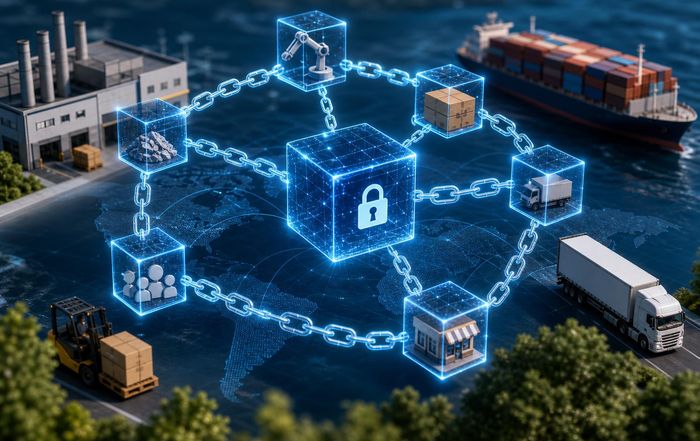
Blockchain Solutions Improving Supply Chain Transparency
How Blockchain Moved From Hype to Supply Chain Infrastructure
Blockchain has shifted decisively from a speculative buzzword to a foundational technology inside some of the world's most complex supply chains. For educated the readership of BizNewsFeed, whose intellectual interests span AI, banking, global trade, sustainability and emerging markets, the story is no longer about whether distributed ledgers will matter, but about how they are being integrated into real operations, what risks remain and which regions and sectors are moving fastest. From food safety in the United States and Europe to critical minerals traceability in Africa and South America, and from pharmaceutical authenticity in Asia to carbon accounting in global logistics, blockchain-based supply chain solutions are steadily redefining how companies, regulators and consumers understand and verify the movement of goods.
The technology's maturation has been driven by a convergence of pressures: demanding regulators in the United States, the European Union and Asia; investors who now treat environmental, social and governance metrics as core performance indicators; and consumers in markets such as Germany, the United Kingdom, Canada, Australia and Singapore who expect radical transparency about provenance and ethical standards. As BizNewsFeed has chronicled across its coverage of global business and markets, this is not a purely technological story but a strategic one, reshaping competitive advantage, risk management and capital allocation for multinationals and high-growth founders alike.
Why Supply Chain Transparency Became a Boardroom Priority
Supply chain transparency has moved from an operational concern to a board-level priority because opaque networks now translate directly into financial, regulatory and reputational risk. The disruptions of the COVID pandemic, the geopolitical realignments affecting trade between the United States, China and Europe, and the energy and commodity shocks linked to conflicts and climate events have exposed how little many organizations knew about their own upstream dependencies. Executives in manufacturing, retail, pharmaceuticals and technology discovered that traditional systems, often based on siloed enterprise resource planning tools and fragmented documentation, could not deliver a real-time, end-to-end view of suppliers, logistics providers and inventory across continents.
At the same time, regulators in key jurisdictions have tightened due diligence expectations. The European Union's Corporate Sustainability Due Diligence Directive and related rules on deforestation, forced labor and product traceability, along with evolving standards from bodies such as the OECD, have raised the bar on demonstrable supply chain oversight. Organizations in the United States and Canada face expanding disclosure obligations on human rights and climate risk, while authorities in the United Kingdom, Australia and Japan are strengthening modern slavery and product safety frameworks. Investors and lenders, including major institutions tracked closely in BizNewsFeed's banking and finance coverage, increasingly use these regulatory signals as benchmarks for risk-adjusted capital decisions, rewarding firms that can prove robust, data-backed governance of their global supply networks.
In parallel, consumer expectations have evolved. Research from organizations such as the World Economic Forum and McKinsey & Company has highlighted that buyers, particularly in Europe, North America and parts of Asia-Pacific, are more willing to pay a premium for products with verified ethical and environmental credentials. This is especially visible in sectors such as food and beverage, fashion, electronics and automotive, where questions about labor conditions, raw materials sourcing and carbon footprints are most acute. Learn more about how global sustainability pressures are reshaping business models by exploring BizNewsFeed's sustainable business insights.
What Blockchain Actually Delivers to Supply Chains
In this context, blockchain's specific attributes address several structural weaknesses in traditional supply chain information systems. A distributed ledger enables multiple parties-manufacturers, suppliers, logistics providers, customs authorities, financiers and retailers-to record transactions in a shared, tamper-evident database without relying on a single central operator. Each transaction is cryptographically linked to the previous one, creating an immutable chain of custody that can span from raw material extraction in Africa or South America to final retail in the United States, Europe or Asia.
This shared, append-only record is particularly powerful where trust among participants is limited or where the risk of data manipulation is high. For example, a food processor in Spain, a logistics provider in the Netherlands and a supermarket chain in the United Kingdom can all reference the same ledger entries documenting temperature-controlled transport, quality checks and certification documents, rather than reconciling separate records that may be incomplete or inconsistent. When properly designed, smart contracts-self-executing agreements encoded on the blockchain-can automate steps such as release of payment upon delivery confirmation or automatic alerts when a compliance document expires, reducing disputes and manual interventions.
Leading technology firms, including IBM, Microsoft and Oracle, have invested heavily in blockchain-based supply chain platforms, often integrating them with cloud infrastructure, AI-based analytics and Internet of Things devices. Learn more about the underlying technology landscape through resources such as the IBM blockchain overview and the Microsoft Azure blockchain and confidential ledger documentation. For BizNewsFeed readers tracking the intersection of AI and enterprise technology, the combination of blockchain for data integrity and AI for predictive insights is emerging as a defining pattern in digital supply chain transformation.
Food and Agriculture: From Farm to Fork on a Shared Ledger
Food and agriculture have been among the earliest and most visible adopters of blockchain-based transparency tools, driven by food safety scandals, complex cross-border logistics and rising demand for sustainability assurances. Global retailers such as Walmart, Carrefour and Tesco have piloted and, in some cases, scaled systems that allow them to trace fresh produce, meat and seafood from farms and fisheries to store shelves in near real time. These initiatives typically involve tagging batches with QR codes or RFID identifiers at origin, with each subsequent handling step-processing, packaging, transport, customs clearance and distribution-recorded as a transaction on a shared ledger.
Such systems have demonstrated practical benefits in outbreak situations, where regulators and companies must rapidly identify contaminated lots and recall affected products. By compressing traceability from days to minutes, blockchain-based solutions can limit the scope of recalls, reduce waste and restore consumer confidence more quickly. Organizations such as the Food and Agriculture Organization of the United Nations and the World Health Organization have examined how digital traceability, including blockchain, can strengthen food safety systems and support more resilient agricultural value chains; further background can be found through platforms such as the FAO's digital agriculture resources.
For producers in emerging markets, including farmers in Brazil, South Africa, Thailand and Malaysia, blockchain-enabled traceability can support access to premium export markets by providing verifiable evidence of compliance with phytosanitary standards, organic certifications or deforestation-free commitments. This creates new opportunities but also raises questions about digital inclusion, data ownership and the distribution of costs and benefits along the value chain. These are themes BizNewsFeed continues to explore across its coverage of global markets and trade and the evolving role of technology in cross-border commerce.
Pharmaceuticals and Healthcare: Authenticity, Safety and Regulatory Trust
In the pharmaceutical and healthcare sectors, blockchain solutions have gained traction as a tool to combat counterfeit drugs, improve recall management and support regulatory compliance across jurisdictions. With complex manufacturing networks spanning Europe, North America, India, China and Southeast Asia, and with high-value products that are attractive targets for falsification, the need for robust, interoperable track-and-trace systems is acute. Regulatory initiatives such as the United States Drug Supply Chain Security Act and the European Union's Falsified Medicines Directive have mandated serialization and traceability, pushing manufacturers, distributors and pharmacies to adopt more sophisticated digital infrastructures.
Consortia involving major pharmaceutical companies, logistics providers and technology firms have piloted permissioned blockchain networks where each handover of a drug package-from manufacturer in Germany or Switzerland to wholesaler, distributor and pharmacy in the United States or the United Kingdom-is recorded in an immutable ledger. The U.S. Food and Drug Administration and the European Medicines Agency have both examined distributed ledger technologies within broader digital health and regulatory innovation agendas; further information about regulatory perspectives can be found through resources such as the FDA's blockchain and emerging technology discussions and the EMA's digital transformation initiatives.
For healthcare systems and insurers, blockchain-backed supply chain visibility can reduce the risk of substandard or falsified medicines entering clinical settings, improve the efficiency of recalls and support more accurate inventory management, particularly in high-cost categories such as biologics and oncology treatments. For BizNewsFeed's business readership, the strategic implication is that healthcare companies that can demonstrate superior control of their supply networks, reinforced by trustworthy data, are better positioned to secure reimbursement, meet regulatory expectations and maintain brand equity in increasingly scrutinized markets.
Fashion, Electronics and Critical Minerals: Ethical Sourcing Under the Microscope
In fashion, consumer electronics and automotive manufacturing, the primary driver of blockchain-based supply chain transparency has been ethical sourcing and responsible mining of critical materials. Public awareness of labor abuses in garment factories, environmental damage from textile production and human rights concerns in cobalt and lithium mining in regions such as the Democratic Republic of the Congo has pushed brands and regulators to demand more granular visibility into upstream suppliers. Companies in Europe, North America and Asia now face not only reputational risk but also legal exposure under due diligence and import control regimes targeting forced labor and conflict minerals.
Blockchain solutions in these sectors typically focus on recording the origin and transformation of materials such as cotton, leather, cobalt, nickel, rare earth elements and recycled plastics. Miners, smelters, refiners, component manufacturers and assemblers contribute data to shared ledgers that document custody and transformation steps, often complemented by digital identity tools and third-party audits. Organizations such as the Responsible Minerals Initiative and the Global Reporting Initiative have explored how distributed ledgers might support more reliable reporting and assurance; readers can explore broader responsible sourcing frameworks through resources such as the Responsible Minerals Initiative's guidance and the GRI standards overview.
For fashion and consumer electronics brands selling into markets with demanding consumers, such as Scandinavia, Germany, the Netherlands, Japan and South Korea, the ability to provide scannable product histories, showing verified sourcing and environmental impact data, is becoming a differentiator. At the same time, automotive manufacturers in Europe, the United States and China are using blockchain-based traceability for battery materials to comply with emerging battery passport regulations and circular economy targets. These developments intersect directly with themes covered in BizNewsFeed's technology and sustainability reporting, where digital infrastructure is increasingly central to ESG strategy and investor communication.
Blockchain, Trade Finance and the Banking Connection
Supply chain transparency is not only about physical goods and regulatory compliance; it is also tightly linked to trade finance and working capital. Banks and alternative financiers have historically struggled with information asymmetry when assessing the risk of financing shipments, inventory or receivables in global trade, particularly when dealing with small and medium-sized suppliers in emerging markets. Paper-based documentation, fragmented data and the risk of fraud in instruments such as letters of credit or bills of lading have constrained credit availability and increased transaction costs.
Blockchain-based supply chain platforms, especially when combined with tokenization and digital identity, promise to give financiers more reliable, real-time visibility into the status of goods and the integrity of underlying transactions. When a shipment from a manufacturer in Vietnam to a retailer in France is recorded on a shared ledger, with verifiable timestamps, IoT sensor data and digitally signed documents, a bank in Singapore or London can make more confident lending decisions, potentially unlocking better terms for participants. Institutions such as the International Chamber of Commerce and the World Trade Organization have highlighted the role of digital trade infrastructure, including distributed ledgers, in closing the global trade finance gap; readers can explore wider trade digitization efforts through the WTO's trade and technology resources.
For BizNewsFeed's audience following banking, crypto and digital assets, the convergence of blockchain-based supply chain records with tokenized invoices, programmable payments and digital currencies is particularly significant. It points toward a future in which supply chain events directly trigger financial flows, risk scoring and insurance coverage, with implications for banks, fintechs, logistics providers and corporates across North America, Europe, Asia and beyond.
Integrating AI, IoT and Blockchain: The Data Integrity Stack
The most advanced supply chain transparency initiatives in 2026 do not treat blockchain in isolation but as one layer in a broader digital stack that includes AI, IoT and cloud-based data platforms. Sensors embedded in containers, trucks, warehouses and production lines generate continuous streams of data about location, temperature, humidity, shock and other conditions. When this data is anchored to a blockchain-either by storing hashes of data sets or by recording key events-it gains a verifiable timestamp and tamper-evident history, which is essential for high-stakes use cases such as pharmaceutical cold chains, perishable foods or high-value electronics.
AI models, in turn, rely on high-quality, trustworthy data to generate accurate forecasts, anomaly detection and optimization recommendations. By using blockchain as a ground truth layer for critical events, companies can improve the reliability of AI-driven insights into demand forecasting, inventory optimization, route planning and supplier risk scoring. This is particularly relevant for multinational enterprises operating across volatile markets in regions such as Latin America, Southeast Asia and parts of Africa, where data quality and consistency have historically been challenging. Readers interested in how AI is reshaping enterprise decision-making can explore BizNewsFeed's AI and business transformation coverage for additional context.
The integration of these technologies also influences workforce dynamics and skills requirements. Supply chain and operations professionals in the United States, Europe, India and other major hubs increasingly need fluency not only in logistics and procurement but also in data analytics, digital governance and platform ecosystems. This shift is reflected in hiring trends and reskilling initiatives reported in BizNewsFeed's jobs and future-of-work section, where digital supply chain expertise is emerging as a critical capability for both established corporations and high-growth startups.
Governance, Standards and the Trust Question
Despite clear momentum, the deployment of blockchain in supply chains raises complex governance and trust questions that executives cannot ignore. A distributed ledger does not automatically guarantee truthful data; it guarantees that once data is recorded, it cannot be altered without detection. The integrity of the system still depends on who is allowed to write data, how they are authenticated, what incentives and controls exist to ensure accuracy and how disputes are resolved. These issues are particularly sensitive when supply chains cross jurisdictions with different legal systems, data protection rules and levels of institutional trust.
Industry consortia, standards bodies and public-private partnerships have emerged as important forums for addressing these challenges. Organizations such as the International Organization for Standardization (ISO) have developed standards related to blockchain and distributed ledger technologies, while sector-specific groups in logistics, shipping, agriculture and mining are working on interoperability frameworks and data schemas. Additional background on standards development can be found through resources such as the ISO's blockchain standards page. For companies, participating in these initiatives is increasingly a strategic choice, shaping not only technical compatibility but also influence over emerging rules of the game.
From a governance perspective, questions about data ownership, access rights and competition law loom large. Retailers may hesitate to share detailed sales and inventory data with suppliers on a shared ledger; logistics providers may worry about exposing route efficiencies; small suppliers may fear that granular transparency will increase buyer leverage. These tensions require carefully designed permission models, data anonymization where appropriate and contractual frameworks that balance transparency with commercial confidentiality. For BizNewsFeed readers in legal, compliance and risk roles, this is an area where cross-functional collaboration is essential, bringing together technology, operations, legal and finance expertise.
Regional Dynamics: Who Is Moving Fastest?
Adoption patterns for blockchain-based supply chain transparency vary across regions, reflecting differences in regulatory environments, industrial structures, digital infrastructure and capital availability. In Europe, strong regulatory drivers around sustainability, human rights and circular economy, combined with robust digital infrastructure in countries such as Germany, the Netherlands, Sweden and Denmark, have produced a dense ecosystem of pilots and early deployments, particularly in manufacturing, automotive, food and fashion. The European Union's emphasis on digital product passports and green deal objectives reinforces this trajectory.
In North America, particularly the United States and Canada, adoption has been driven by a combination of food safety regulations, pharmaceutical track-and-trace requirements and private sector innovation in logistics and e-commerce. Major retailers, logistics providers and technology firms headquartered in the United States have played an outsized role in shaping global blockchain supply chain platforms, often extending their solutions into Latin America and Asia-Pacific. Meanwhile, in Asia, countries such as Singapore, South Korea, Japan and China have launched national or regional initiatives to digitize trade documentation and port operations, with blockchain as one component of broader smart logistics strategies.
Emerging markets in Africa, South America and Southeast Asia are increasingly part of these networks, often as sources of raw materials or agricultural products. For producers and exporters in South Africa, Brazil, Malaysia and Thailand, participation in blockchain-enabled traceability systems can support access to high-value markets in Europe, North America and East Asia, but may also require investment in digital infrastructure, training and governance capabilities. These dynamics, and their implications for global trade patterns, capital flows and development, are central to the international business narratives covered in BizNewsFeed's economy and global sections.
Big Implications for Executives and Founders
For executives and founders across industries, the evolution of blockchain solutions for supply chain transparency presents both opportunity and obligation. On the opportunity side, companies that invest early and thoughtfully in verifiable traceability can differentiate on trust, meet or exceed regulatory expectations, unlock new financing options and build more resilient, data-driven operations. This is particularly relevant for high-growth ventures seeking capital, where demonstrating robust supply chain governance can be a decisive factor for investors focused on ESG and long-term risk; BizNewsFeed's coverage of founders and funding consistently highlights how credible data infrastructure is now part of the investment narrative.
On the obligation side, the move toward immutable, shared records raises expectations that companies will not only know but act upon what is revealed in their supply chains. Discovering evidence of labor abuses, environmental harm or safety issues, and then failing to respond, will be harder to defend in the eyes of regulators, investors and consumers once data is broadly accessible and auditable. Executives must therefore pair technological implementations with governance frameworks, escalation protocols and stakeholder engagement strategies that reflect the heightened visibility and accountability that blockchain-based transparency brings.
For the main business community that increasingly turns to BizNewsFeed for insight into AI, banking, crypto, markets, technology and sustainability, the message is clear: blockchain is no longer a speculative adjunct to the real economy but a maturing layer of critical infrastructure in supply chain management. The organizations that treat it as such-integrating it with AI, IoT and robust governance, aligning it with regulatory trends across continents and embedding it in their strategic planning-will be better positioned to navigate the uncertainties of global trade, climate risk and geopolitical fragmentation in the decade ahead.