

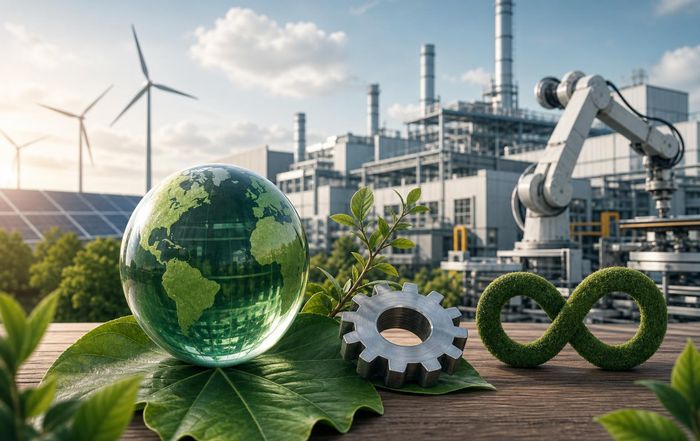
Sustainable Manufacturing for Long-Term Success
How Sustainability Became a Core Business Strategy
Surely you must have noticed sustainable manufacturing has moved from an aspiration to a pillar of long-term corporate strategy, and for the global subscribing and visiting members of BizNewsFeed this shift is not just an small discussion about corporate social responsibility but a defining factor in competitiveness, capital access, regulatory risk, and brand equity across markets from the United States and Europe to Asia, Africa, and South America. As regulators tighten climate disclosure rules, investors sharpen their scrutiny of environmental, social, and governance performance, and customers demand transparency from factory floor to final product, manufacturing leaders in sectors as diverse as automotive, electronics, consumer goods, and industrial equipment are discovering that sustainability and profitability are now deeply intertwined rather than competing priorities.
The evolution of sustainable manufacturing has been accelerated by several converging forces: the global push to meet the Paris Agreement climate goals, the rise of sophisticated digital technologies that enable real-time optimization of energy and materials, and a new generation of founders and executives who view resilience and responsibility as inseparable. For decision-makers who follow the broader business and policy context through platforms such as the BizNewsFeed business coverage and global analysis, the message is increasingly clear: long-term success in manufacturing now depends on integrating sustainability into design, operations, supply chains, and corporate governance, rather than treating it as a peripheral reporting exercise.
Defining Sustainable Manufacturing in 2026
In 2026, sustainable manufacturing is understood as a comprehensive approach that reduces environmental impact, optimizes resource use, and enhances social and economic value across the entire product lifecycle, from raw material extraction and component production to distribution, use, and end-of-life recovery. It is informed by circular economy principles, life-cycle assessment methodologies, and climate science, but it is also deeply shaped by pragmatic considerations such as cost, risk, and regulatory compliance in key markets like the United States, the European Union, China, and fast-growing economies in Asia and Africa.
Organizations such as the World Economic Forum have helped frame this evolution by highlighting how advanced manufacturing can drive both decarbonization and productivity, and executives increasingly turn to resources that explain how to accelerate industrial transformation while staying ahead of regulatory and stakeholder expectations. In parallel, national and regional initiatives, from the European Green Deal to industrial policies in countries like Germany, Japan, South Korea, and Canada, have raised the bar for what constitutes responsible manufacturing, creating a new baseline that global supply chains must now meet or exceed.
Regulatory Pressure and Market Expectations
The regulatory environment in 2026 is significantly more demanding than even a few years earlier, and this is reshaping long-term planning for manufacturers across North America, Europe, and Asia. The European Union, through the Corporate Sustainability Reporting Directive and related climate and supply chain due diligence rules, has effectively set a global standard that impacts not only European manufacturers but also suppliers in the United Kingdom, the United States, China, India, and Southeast Asia that wish to access the EU market, while the U.S. Securities and Exchange Commission climate disclosure rules and similar frameworks in Canada, the United Kingdom, and Australia are pushing listed manufacturers to provide more granular data on emissions, climate risks, and transition strategies.
Beyond formal regulation, voluntary frameworks have become quasi-mandatory for companies seeking to maintain credibility with global investors and customers, with the Task Force on Climate-related Financial Disclosures widely adopted as a reference for climate risk reporting, and the International Sustainability Standards Board shaping unified sustainability disclosure standards that investors can compare across jurisdictions. For manufacturing leaders tracking these changes through dedicated economy and markets analysis such as the BizNewsFeed economy and markets sections, the lesson is that compliance alone is no longer sufficient; sustainable manufacturing must be embedded in strategy to protect enterprise value and avoid stranded assets as carbon-intensive technologies and processes become obsolete.
The Economics of Sustainable Manufacturing
Contrary to the outdated perception that sustainability is merely a cost center, by 2026 there is substantial evidence that well-executed sustainable manufacturing strategies can improve margins, reduce volatility, and open new revenue streams. Energy efficiency investments in factories in Germany, Japan, and the United States, for instance, have consistently delivered attractive payback periods, especially as energy price volatility has increased due to geopolitical tensions and climate-related disruptions, while process innovations in sectors such as chemicals, steel, and cement are beginning to show that low-carbon pathways can be competitive when viewed over a full asset lifecycle.
The economics of sustainable manufacturing are also shaped by the growing availability of green finance and sustainability-linked loans, which offer more favorable terms to companies that commit to and deliver on measurable environmental performance targets. Financial institutions and multilateral bodies, including the World Bank, have expanded resources to help companies and policymakers understand climate-smart industrial strategies, and private capital is increasingly aligned with these priorities, as seen in the growth of transition funds targeting heavy industry in regions such as Europe, North America, and East Asia. For founders and executives who follow funding and capital trends via BizNewsFeed funding coverage, it is evident that access to capital is becoming conditional on credible sustainability roadmaps, especially in energy-intensive manufacturing segments.
AI and Digital Technologies as Sustainability Catalysts
Artificial intelligence, advanced analytics, and industrial Internet of Things platforms have become indispensable tools for sustainable manufacturing in 2026, enabling a level of granular optimization that was previously unattainable. Manufacturers in the United States, Germany, South Korea, and Singapore, for example, deploy AI-driven systems to monitor energy consumption, predict equipment failures, and adjust process parameters in real time, thereby reducing waste, emissions, and unplanned downtime, while digital twins of factories and supply chains allow scenario analysis that helps decision-makers test decarbonization options before committing capital.
Global technology leaders such as Microsoft, Siemens, and Schneider Electric have invested heavily in platforms that combine industrial automation with sustainability analytics, while specialized providers and startups across Europe, Asia, and North America build sector-specific solutions for automotive, electronics, pharmaceuticals, and food processing. For readers who follow the intersection of AI and industry through BizNewsFeed's dedicated AI coverage and technology reporting, this convergence of digitalization and decarbonization is one of the most significant developments of the decade, as it allows manufacturers to pursue both cost reduction and environmental performance through the same technology stack.
Research institutions and innovation hubs, from the Massachusetts Institute of Technology to leading technical universities in Germany, Switzerland, and the Nordic countries, have published extensive work on how AI can support resource-efficient production, and industrial consortia are sharing best practices to help smaller manufacturers adopt these tools. As a result, sustainable manufacturing is increasingly data-driven, with real-time dashboards, predictive models, and automated controls turning sustainability from an annual reporting exercise into an operational discipline embedded in daily decision-making.
Circular Economy and Materials Innovation
A defining characteristic of sustainable manufacturing in 2026 is the shift from linear "take-make-dispose" models to circular approaches that prioritize longevity, reuse, remanufacturing, and recycling, particularly in sectors such as electronics, automotive, textiles, and consumer goods where product lifecycles and material flows are under intense scrutiny. Companies operating in Europe, North America, and Asia are designing products for disassembly, modularity, and repair, responding not only to environmental concerns but also to regulatory initiatives such as right-to-repair rules and extended producer responsibility schemes that are gaining traction in the European Union, the United States, and several Asian economies.
Materials innovation is central to this transformation, with manufacturers exploring bio-based alternatives to petrochemical-derived plastics, low-carbon steel and cement, and advanced composites that offer improved performance with lower environmental footprints. Organizations such as the Ellen MacArthur Foundation have played a pivotal role in promoting the circular economy and offering guidance on how manufacturers can embed circular design principles into product development and supply chain strategies, and many companies now use life-cycle assessment tools to quantify the environmental impact of different material choices across regions and markets.
For businesses and investors tracking sustainability trends through specialized insights such as BizNewsFeed's sustainable business coverage, circular manufacturing is increasingly viewed as a source of competitive differentiation, enabling manufacturers to reduce dependence on volatile commodity markets, improve resilience to supply chain disruptions, and meet growing customer demand for products with lower environmental footprints in markets from the United Kingdom and France to Japan, Australia, and Brazil.
Global Supply Chains and Regional Dynamics
Sustainable manufacturing cannot be understood in isolation from the global supply chains that connect raw materials, components, and finished products across continents, and by 2026 the geography of these supply chains is being reshaped by a combination of sustainability imperatives, geopolitical tensions, and technological change. Companies headquartered in the United States, Germany, Japan, and South Korea are re-evaluating their sourcing and production footprints, balancing the benefits of nearshoring and friend-shoring with the need to ensure that sustainability standards are consistently applied across suppliers in Asia, Africa, and Latin America.
Regulatory developments such as the EU's deforestation regulation, forced labor due diligence requirements, and carbon border adjustment mechanisms are forcing manufacturers to map and monitor their upstream supply chains with greater precision, while investors and civil society organizations are increasingly adept at scrutinizing these networks. Resources from organizations like the OECD help companies navigate responsible supply chain practices, and manufacturers are investing in traceability technologies, including blockchain-based systems and advanced data-sharing platforms, to demonstrate compliance and build trust with customers and regulators.
For the global readership of BizNewsFeed, which spans markets from North America and Europe to Asia-Pacific, the regional dimension of sustainable manufacturing is particularly important, as policy frameworks, energy mixes, labor conditions, and infrastructure differ significantly between countries such as China, India, South Africa, and Brazil, and advanced economies like Canada, the Netherlands, Sweden, and Singapore. Companies that succeed in this environment are those that adopt globally consistent sustainability principles while tailoring their implementation to local realities, supported by strong governance and transparent communication.
Talent, Skills, and the Future of Manufacturing Jobs
The transformation toward sustainable manufacturing is reshaping the labor market, creating new roles, redefining existing ones, and demanding a blend of technical, digital, and sustainability-related skills that was rare in factories even a decade ago. Engineers and operators in plants in the United States, Germany, and Japan, for instance, are now expected to understand not only production processes but also energy management, emissions accounting, and data analytics, while new positions such as sustainability engineers, circular design specialists, and ESG data managers are emerging across manufacturing organizations in Europe, Asia, and the Americas.
Governments and educational institutions are responding by updating curricula and launching specialized programs focused on green manufacturing, industrial decarbonization, and sustainable supply chain management, and companies are investing in reskilling and upskilling initiatives to ensure that their workforces can operate advanced digital and low-carbon technologies. For readers tracking employment trends and workforce implications through BizNewsFeed's jobs coverage, it is clear that sustainable manufacturing is not only an environmental and economic issue but also a human capital challenge, with implications for wage structures, regional employment patterns, and social stability in industrial regions from the American Midwest and German Ruhr to Chinese coastal provinces and emerging manufacturing hubs in Southeast Asia and Africa.
At the same time, there is a growing recognition that sustainable manufacturing can help address demographic and talent shortages in countries with aging populations, such as Japan, Italy, and Spain, by making manufacturing careers more attractive to younger workers who prioritize purpose and impact, and by deploying automation and AI to alleviate physically demanding or repetitive tasks while creating higher-value roles in planning, optimization, and innovation.
Founders, Innovation, and the Startup Ecosystem
While large incumbents play a critical role in transforming global manufacturing systems, the startup ecosystem has become a powerful source of innovation in sustainable manufacturing, with founders in the United States, the United Kingdom, Germany, Israel, Singapore, and other innovation hubs building companies that tackle specific bottlenecks in decarbonization, circularity, and digitalization. These startups range from climate-tech ventures developing low-carbon industrial processes and advanced materials to software companies offering AI-driven optimization platforms and traceability solutions, and they often emerge from university research or corporate spin-offs.
Venture capital and corporate venture arms have responded by directing significant capital toward industrial decarbonization and circular economy solutions, and many of these deals are closely watched by readers of BizNewsFeed's founders and funding sections, which track how capital is flowing into climate and industrial innovation globally. Startups in regions such as Scandinavia, Canada, and Australia are leveraging supportive policy environments and abundant renewable energy to pilot new manufacturing models, while entrepreneurs in emerging markets across Africa, South America, and Southeast Asia are innovating around localized, resource-efficient production tailored to regional needs.
Collaboration between startups and established manufacturers is increasingly common, as incumbents seek access to cutting-edge technologies and agile experimentation capabilities, while startups require industrial-scale testbeds and distribution networks. This symbiosis is accelerating the diffusion of sustainable manufacturing practices across sectors and geographies, turning what was once a fringe activity into a mainstream strategic priority for both new and established market players.
Finance, Crypto, and ESG-Linked Capital Flows
Capital allocation is a decisive lever in the transition to sustainable manufacturing, and by 2026 the financial sector has made significant progress in integrating climate and sustainability considerations into lending, investment, and risk management decisions, with banks in the United States, Europe, and Asia tightening their exposure to carbon-intensive assets and expanding green and transition finance offerings targeted at industrial clients. For readers who follow BizNewsFeed's banking and crypto coverage, the interplay between traditional finance, digital assets, and ESG criteria is a critical area of interest, as investors seek both financial returns and measurable impact from their portfolios.
Sustainability-linked bonds and loans, which tie interest rates to the achievement of specific environmental performance indicators such as emissions reductions or energy efficiency gains, have become a popular instrument for manufacturers in Europe, North America, and Asia, while green bonds continue to finance large-scale projects such as renewable energy installations, energy-efficient plant upgrades, and low-carbon transport infrastructure. Digital technologies, including blockchain, are being explored to enhance transparency and traceability in ESG-linked financial instruments, although the crypto and digital asset space remains subject to regulatory scrutiny and evolving standards.
Financial regulators and international bodies are working to harmonize taxonomies and disclosure requirements to reduce greenwashing and improve comparability, and manufacturers seeking to attract capital must now demonstrate robust governance, credible transition plans, and transparent reporting. As a result, sustainable manufacturing is not only a matter of operational excellence but also a critical component of corporate finance strategy, influencing credit ratings, cost of capital, and investor relations across global markets.
Travel, Trade, and the Geography of Production
The relationship between sustainable manufacturing and global travel and trade has become more complex in 2026, as companies and policymakers grapple with the environmental impact of long-distance freight, business travel, and tourism-related consumption patterns. Manufacturers are increasingly factoring logistics emissions into their sustainability strategies, optimizing supply chains to reduce unnecessary transport, shifting to lower-carbon modes such as rail and maritime where feasible, and collaborating with logistics providers to adopt alternative fuels and more efficient routing.
For readers interested in how sustainability intersects with mobility and tourism through BizNewsFeed's travel coverage, the question is how globalized production systems can be reconciled with climate goals, especially as countries in Europe, Asia, and North America introduce or expand carbon pricing mechanisms and consider the climate implications of trade agreements. Some manufacturers are responding by regionalizing production to bring factories closer to end markets in North America, Europe, and Asia-Pacific, thereby reducing transport emissions and increasing resilience to disruptions such as pandemics, geopolitical tensions, and extreme weather events.
At the same time, sustainable manufacturing practices are influencing the travel and hospitality sectors themselves, as providers of transportation, accommodation, and tourism services seek lower-impact materials, energy-efficient equipment, and circular solutions for everything from furnishings to food packaging. This cross-sector convergence reinforces the notion that sustainable manufacturing is not an isolated domain but a foundational enabler of broader economic decarbonization and resilience.
Building Trust Through Transparency and Governance
Ultimately, long-term success in sustainable manufacturing depends on trust: trust from customers that environmental claims are accurate, trust from investors that transition strategies are credible, trust from regulators that compliance is robust, and trust from employees and communities that the shift toward sustainability will create opportunities rather than merely impose costs. This trust is built through transparent communication, rigorous data, and strong governance structures that embed sustainability into decision-making at all levels of the organization.
Companies are increasingly using sustainability dashboards, third-party verification, and digital reporting tools to provide stakeholders with timely, accessible information on progress toward environmental and social goals, while boards of directors in leading manufacturers in the United States, Europe, and Asia are expanding their oversight of climate and sustainability risks, often supported by dedicated board committees and specialized expertise. For subs and readers who rely on BizNewsFeed's 100% unique and well researched news coverage and broader homepage insights to track corporate developments, it is evident that companies that communicate clearly and act consistently are better positioned to navigate the scrutiny that accompanies ambitious sustainability claims.
In parallel, international standards and best practices are evolving, with organizations such as the ISO expanding their portfolio of environmental and energy management standards that provide structured frameworks for manufacturers seeking to systematize their sustainability efforts. As these frameworks become more widely adopted, the distinction between "sustainable" and "mainstream" manufacturing is fading, replaced by a spectrum of performance in which leaders continually raise the bar and laggards face increasing pressure from markets, regulators, and civil society.
The Decisions Ahead, From Compliance to Competitive Advantage
Looking toward the remainder of the decade, sustainable manufacturing is poised to become an even more decisive factor in determining which companies thrive and which struggle in an environment shaped by climate change, technological disruption, and shifting societal expectations. Manufacturers that treat sustainability as a compliance exercise will find it increasingly difficult to keep pace with those that integrate environmental and social considerations into core strategy, innovation, and culture, particularly as customers, employees, and investors in markets from the United States and United Kingdom to China, India, and South Africa reward authenticity and measurable impact.
For the entrepreneurial, business and investment community, visiting BizNewsFeed, sustainable manufacturing represents both a challenge and an opportunity: a challenge because it requires significant investment, organizational change, and new capabilities across AI, data, engineering, and governance, and an opportunity because it opens pathways to new products, new markets, and more resilient business models that can withstand the shocks of a rapidly changing world. As companies across sectors and regions continue to experiment, collaborate, and scale what works, sustainable manufacturing is set to move from a differentiator to a baseline expectation, and those who embrace it early and decisively are likely to define the industrial landscape of the 2030s and beyond.