

Jobs Transformation in the Age of Automation: How Work Is Being Rewritten in 2026
A New Work Reality for the BizNewsFeed Reader
By early 2026, the transformation of jobs under the combined pressure of automation, artificial intelligence and global digitization has become a defining feature of business strategy rather than a speculative talking point, and the editorial team at BizNewsFeed encounters this shift in almost every dialogue with executives, founders, investors and policymakers across North America, Europe, Asia-Pacific, Africa and South America. What was once a distant narrative of robotized factories and fully automated offices has evolved into a complex reconfiguration of tasks, workflows and organizational models, in which humans and machines are being recombined in ways that challenge long-standing assumptions about employment, productivity, value creation and corporate responsibility. For the global business audience that turns to BizNewsFeed's business coverage for context and clarity, the central question has moved beyond whether automation will reshape work to how leaders can architect this transformation in a way that protects competitiveness while reinforcing trust, opportunity and social stability in their core markets.
This new reality is especially visible in the cross-regional patterns that BizNewsFeed tracks daily: in the United States and Canada, executives are integrating AI copilots into knowledge work to address talent shortages; in the United Kingdom, Germany, France and the Netherlands, industrial firms are retooling plants with advanced robotics while negotiating new social compacts with labor; in Singapore, South Korea and Japan, governments are using automation to mitigate demographic pressures; and in South Africa, Brazil, Malaysia and other emerging markets, policymakers are grappling with the dual challenge of attracting high-tech investment without undermining labor-intensive growth models. Through its global economy analysis, the publication has observed that automation is not a single wave but a series of overlapping currents, shaped by regulation, capital flows, infrastructure, demographics and cultural attitudes toward technology and risk.
From Hype to Measurable Impact
Over the past decade, automation has advanced from being synonymous with industrial robots on automotive assembly lines to encompassing sophisticated software systems capable of performing complex cognitive tasks such as legal document review, medical image interpretation, fraud detection and personalized customer interaction. Institutions such as the World Economic Forum and McKinsey & Company have repeatedly quantified the share of global work activities that are technically automatable, especially routine and predictable tasks in manufacturing, services and administration. Yet the empirical reality that business leaders confront in 2026 is more nuanced than the early projections of imminent mass unemployment, with a pattern of job displacement, job creation and pervasive job redesign emerging across sectors and geographies.
In the United States, United Kingdom, Germany, Canada, Australia and other advanced economies, automation has increasingly manifested as a reallocation of tasks within occupations rather than the wholesale elimination of entire professions, particularly where strong labor institutions, regulatory frameworks and skills investments have moderated the pace and direction of substitution. Research from bodies such as the International Labour Organization indicates that many roles have become more hybrid, combining human judgment and relationship-building with machine-driven analytics, monitoring and execution. Businesses seeking a comparative view of how different countries are managing this transition can draw on the OECD's work on the future of work, which highlights the interplay between national policies, firm-level strategies and labor market outcomes.
The mainstreaming of generative AI since 2023 has accelerated this transformation. Tools from OpenAI, Google, Microsoft and Anthropic are now embedded in productivity suites, CRM platforms, development environments and back-office workflows, enabling organizations to automate document drafting, code generation, knowledge retrieval and routine decision support at scale. For readers following BizNewsFeed's AI-focused coverage, the key observation is that these systems are no longer experimental side projects; they sit at the center of operating models in banking, professional services, healthcare, logistics, retail and travel, and their impact is now measurable in productivity metrics, margin profiles and organizational charts.
Sectoral Shifts: Where Jobs Are Changing Fastest
The transformation of jobs is highly uneven across industries, and BizNewsFeed has increasingly focused on the sectors where automation intersects most intensely with regulation, risk and customer expectations. In financial services, automation is reshaping front-, middle- and back-office functions simultaneously. Robo-advisors, algorithmic trading platforms and AI-powered credit and risk models are altering the work of analysts, traders and underwriters in major hubs such as New York, London, Frankfurt, Zurich, Toronto, Singapore and Hong Kong. Compliance teams are deploying machine learning to monitor transactions in real time, while retail banks are using conversational AI to handle routine customer interactions, freeing human staff for complex advisory roles. Readers can explore these dynamics in more depth through BizNewsFeed's dedicated banking coverage, which tracks how incumbent banks and fintech challengers are restructuring roles to balance efficiency, resilience and regulatory scrutiny.
In the broader technology sector, automation is simultaneously a creator and disruptor of jobs. Software development, quality assurance and IT operations are being reshaped by AI coding assistants, automated testing frameworks and self-healing infrastructure, which reduce the need for certain repetitive engineering tasks but expand the demand for higher-value capabilities in systems architecture, cybersecurity, AI governance and product strategy. Innovation hubs across the United States, Canada, Germany, Sweden, the Netherlands, Singapore and South Korea are seeing strong demand for professionals who can orchestrate complex socio-technical systems, combining technical fluency with domain expertise, communication skills and a sophisticated understanding of risk. BizNewsFeed's technology reporting has documented how these hybrid roles are becoming central to digital transformation programs across sectors.
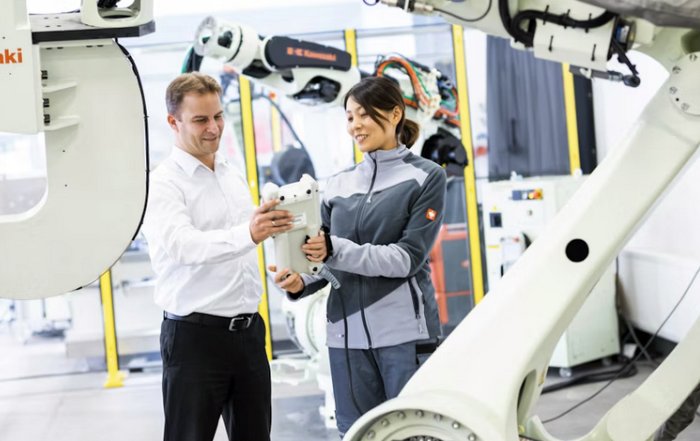
Manufacturing and logistics, historically the epicenter of automation debates, continue to integrate robotics, computer vision, digital twins and predictive analytics into factories, warehouses and supply chains. From automotive plants in Germany and Japan to electronics assembly in South Korea and Thailand and logistics hubs in the United States, United Kingdom and Netherlands, companies are deploying "cobots" and human-in-the-loop systems that require workers to master monitoring, troubleshooting and optimization of automated equipment rather than purely manual tasks. Data from the International Federation of Robotics shows that countries with strong vocational training and apprenticeship systems, including Germany, Switzerland and Denmark, have been more successful in enabling workers to transition into these hybrid roles, sustaining industrial competitiveness while limiting social dislocation.
Knowledge-intensive services are undergoing comparable upheaval. Law firms, consultancies, marketing agencies and media organizations across North America, Europe and Asia are using AI to draft documents, synthesize research, generate creative variants and personalize content at scale. While entry-level, document-heavy roles are being redefined or reduced, firms are redesigning career paths to emphasize advisory capabilities, complex problem solving and relationship management. Analyses from institutions such as the IMF and World Bank underscore that these sectoral changes, taken together, are reshaping productivity, wage structures and labor shares of income, with implications for macroeconomic stability and growth trajectories that are closely followed in BizNewsFeed's markets coverage.
AI as a Job Transformer Rather Than a Pure Job Killer
The once-dominant narrative that AI and automation would simply destroy more jobs than they create has not been borne out in the way many feared, especially when examined through the evidence-based lens that BizNewsFeed applies to labor market reporting. In practice, AI is acting as a force multiplier for many professionals, automating repetitive, low-value tasks while amplifying human capacity for analysis, creativity and strategic decision-making. In software engineering, AI coding assistants significantly reduce the time required for boilerplate code and routine debugging, enabling teams to focus on architecture, security and user experience. In healthcare, diagnostic tools support clinicians in interpreting imaging and lab results, while administrative automation reduces the burden of paperwork. In customer service, chatbots handle common inquiries around the clock, while human agents concentrate on complex, emotional or high-stakes interactions.
Studies from MIT and other leading research institutions suggest that when AI is thoughtfully integrated into workflows, it can deliver substantial productivity and quality gains, particularly for less-experienced workers who benefit from embedded guidance and real-time feedback. However, these benefits are not automatically inclusive, and the distribution of gains between capital and labor, or between high- and lower-skilled workers, depends heavily on leadership choices, organizational design and public policy. For the global business community that follows BizNewsFeed's global coverage, the strategic challenge is to ensure that AI augments rather than marginalizes the workforce, with transparent communication about objectives, inclusive training strategies and mechanisms to share the value created.
The evolution of AI governance frameworks is central to this effort. Regulatory initiatives such as the EU AI Act, guidance from the European Commission, and standards work by bodies like NIST in the United States are pushing organizations to institutionalize transparency, accountability, human oversight and bias mitigation in AI-enabled processes. These requirements are creating new roles in AI ethics, risk, compliance and audit, and they are reshaping how boards and executive teams oversee technology investments. Business leaders seeking to navigate this landscape can consult resources such as Harvard Business Review, which regularly explores the intersection of AI, strategy and organizational design, and can follow BizNewsFeed's news reporting for emerging regulatory and enforcement developments across key jurisdictions.
Skills, Reskilling and the New Talent Equation
The most profound transformation in the age of automation is arguably not technological but human, as workers, employers, educators and policymakers reconsider which skills underpin employability, mobility and leadership in an increasingly automated economy. Across the markets that BizNewsFeed covers-from the United States, United Kingdom, Germany and France to India, China, Brazil, South Africa and beyond-there is growing consensus that a blend of digital literacy, domain expertise, critical thinking, adaptability and interpersonal capabilities is essential for sustainable careers. Degrees and traditional credentials remain important signals, but companies are increasingly prioritizing learning agility, cross-functional experience and demonstrated problem-solving ability over linear, static résumés.
Organizations such as the World Economic Forum and UNESCO have emphasized the need for large-scale reskilling and upskilling strategies aligned with national industrial policies and regional development plans, ensuring that training investments are directed toward sectors with strong growth prospects and clear pathways into quality employment. For firms competing in tight global talent markets, partnerships with universities, technical colleges, bootcamps and online learning platforms have become central to talent strategy, with programs focused on data analytics, AI operations, cybersecurity, sustainability, digital project management and advanced manufacturing. Business readers can examine how these trends intersect with hiring, layoffs, wage trends and skills gaps through BizNewsFeed's jobs coverage, which tracks labor market developments across major economies.
The rise of micro-credentials, modular learning and competency-based hiring is reshaping how individuals build and signal their capabilities, especially in fast-moving domains such as AI, crypto, fintech, climate tech and advanced manufacturing. Platforms like Coursera, edX and LinkedIn Learning, often developed in collaboration with top universities and corporations, are enabling workers from Italy and Spain to Singapore, Thailand, New Zealand and South Africa to access cutting-edge content at relatively low cost. For employers, the strategic question is how to integrate these new forms of credentials into recruitment, performance management and internal mobility systems, and how to embed continuous learning into the flow of work rather than treating it as an episodic benefit. Reports from the World Bank and other multilateral institutions highlight that countries that successfully align education and training systems with industrial strategies tend to see stronger productivity growth and more inclusive labor market outcomes.
Founders, Funding and the Automation Startup Ecosystem
The age of automation has catalyzed a dynamic startup ecosystem, as founders across North America, Europe, Asia-Pacific, the Middle East, Latin America and Africa build companies focused on AI-native productivity tools, robotics platforms, workflow automation, data infrastructure and sector-specific applications in healthcare, logistics, manufacturing, legal services, retail and financial technology. Venture capital and growth equity investors have made automation and AI infrastructure central investment themes, directing substantial capital toward companies that promise to unlock new efficiencies and business models by reimagining how work is organized and executed. Readers interested in these dynamics can follow BizNewsFeed's founders coverage and funding coverage, where entrepreneurs and investors at the forefront of this transformation are profiled and analyzed.
In markets such as the United States, United Kingdom, Germany, France, Israel, Singapore and South Korea, automation-focused startups are not only competing with incumbents but also collaborating with them through pilots, joint ventures and strategic investments, as large enterprises seek to accelerate transformation while managing risk. This is particularly visible in banking, insurance, logistics, manufacturing and travel, where legacy systems and regulatory constraints make it difficult for incumbents to innovate at the pace demanded by customers and regulators. Accelerator programs run by organizations such as Y Combinator, Techstars and Plug and Play Tech Center continue to play a pivotal role in nurturing early-stage automation ventures, while corporate venture arms and sovereign wealth funds from regions such as the Middle East and Asia are increasingly active in later-stage financing.
At the same time, automation startups are operating under intensifying scrutiny regarding data privacy, algorithmic bias, labor displacement and cybersecurity. Many founders are therefore embedding responsible AI principles into product design, data governance and go-to-market strategies from the outset, recognizing that trust is a strategic asset. Initiatives like the Partnership on AI and research from leading academic centers provide guidance on ethical and socially responsible approaches to automation, helping companies differentiate themselves in markets where regulators, enterprise customers and employees are increasingly sensitive to the social implications of AI. For investors and corporate development teams who rely on BizNewsFeed's markets insights, the interplay between innovation, regulation and public perception is now a core element of due diligence and portfolio construction.
Automation, Inequality and the Global Labor Divide
While automation offers significant productivity gains and the potential for new forms of value creation, it also raises difficult questions about inequality, inclusion and the distribution of economic benefits within and between countries. High-income economies such as the United States, Canada, Germany, the Netherlands, Sweden, Norway, Switzerland, Singapore and Japan generally possess the capital, digital infrastructure and institutional capacity to deploy automation at scale while investing in education, social protection and active labor market policies that can cushion the impact on workers. Emerging and developing economies across Asia, Africa and South America, including India, South Africa, Brazil, Malaysia and Thailand, face a more complex calculus, as they weigh the need to remain competitive in global value chains against the risk of undermining labor-intensive development models that have historically absorbed large numbers of low- and middle-skilled workers.
Institutions such as the World Bank and UNDP have warned that premature or poorly managed automation could exacerbate global inequality, particularly if high-income countries increasingly onshore production using advanced robotics and AI, thereby reducing demand for labor in lower-cost regions. At the same time, digital technologies, remote work and cross-border platforms are creating new opportunities for talent in countries such as Nigeria, Kenya, Vietnam and the Philippines to participate in global service markets, provided that investments in connectivity, skills and regulatory frameworks are made. Business leaders who follow BizNewsFeed's global analysis are increasingly incorporating these dynamics into decisions about sourcing, offshoring, nearshoring and market entry, recognizing that reputational and regulatory risks around "automation arbitrage" and social dumping are rising.
Within countries, automation has the potential to widen wage gaps between highly skilled, adaptable workers and those in routine, automatable roles, unless deliberate policies and corporate strategies are implemented to support transitions and foster job creation in complementary sectors such as care, education, green infrastructure and local services. Research from organizations such as the Brookings Institution and the Institute for the Future of Work highlights the importance of place-based strategies that address regional disparities, particularly in areas where traditional industries are in decline and new investment is needed to build diversified, resilient local economies. For the globally minded audience of BizNewsFeed, understanding these spatial and social dimensions of automation is essential for assessing political risk, regulatory shifts, consumer sentiment and long-term market potential across regions from North America and Europe to Asia, Africa and South America.
Sustainability, Automation and the Future of Work
The transformation of jobs through automation is unfolding alongside an equally consequential shift toward sustainability, as governments, investors, companies and citizens respond to climate change, biodiversity loss and resource constraints. This convergence is particularly evident in the rise of green jobs and sustainable business models that leverage advanced analytics, Internet of Things devices, robotics and AI to optimize energy use, reduce waste, monitor environmental impacts and enable circular economy practices. From large-scale renewable energy projects in Spain, Denmark and Australia to smart manufacturing in Germany and Italy and low-carbon mobility initiatives in the Netherlands, Singapore and Japan, automation technologies are enabling more efficient and transparent operations that align with environmental, social and governance (ESG) objectives.
Organizations such as the International Energy Agency and UN Environment Programme have documented how the clean energy transition and broader sustainability agenda are generating new employment opportunities across engineering, construction, operations, maintenance, data science and policy, even as they disrupt traditional roles in fossil fuel industries and carbon-intensive sectors. Business leaders can learn more about sustainable business practices and their implications for jobs, competitiveness and capital flows through BizNewsFeed's sustainability coverage, which examines how companies in sectors from energy and transport to real estate and consumer goods are integrating ESG considerations into strategy, operations and workforce planning.
In this context, automation can act as both risk and enabler. Poorly managed transitions risk leaving workers in carbon-intensive sectors behind, fueling social and political resistance to climate policies and undermining the legitimacy of sustainability agendas. Conversely, well-designed strategies that combine investment in clean technologies with robust reskilling programs, regional development initiatives and social dialogue can create pathways into high-quality, future-proof employment. Countries such as Germany, Denmark and Norway are frequently cited as examples of how industrial policy, education systems and social partnership can be aligned to navigate these complex transitions. For companies that operate across multiple jurisdictions, these examples offer practical insights into how to synchronize automation, decarbonization and workforce strategies in a way that supports both competitiveness and social cohesion.
Leadership, Governance and Trust in an Automated Era
For executives, board members, founders and policymakers who form the core readership of BizNewsFeed, the transformation of jobs in the age of automation is fundamentally a leadership and governance challenge rather than a purely technological one. Organizations that frame automation narrowly as a cost-cutting exercise risk eroding trust, damaging their employer brand and weakening long-term innovation capacity, particularly in tight labor markets where skilled workers have options and values-driven employment choices matter. In contrast, companies that adopt a strategic, transparent and participatory approach-engaging employees in redesigning workflows, investing in training and internal mobility, and clearly articulating how productivity gains will be shared-are more likely to build resilient, adaptive and engaged workforces.
Governance frameworks that integrate automation into broader risk management, ethics and ESG structures are becoming a board-level priority. Directors are being asked to oversee not only cybersecurity and data privacy, but also algorithmic fairness, workforce transitions and the cultural implications of technology choices. Resources from organizations such as the World Economic Forum, OECD and Business Roundtable provide guidance on responsible technology governance, while thought leadership from outlets such as MIT Sloan Management Review offers practical examples of how leading firms are embedding automation into their operating models without undermining trust. For BizNewsFeed, which connects developments across AI, banking, business, crypto, the wider economy, technology and travel, the editorial task is to continually link technological innovation to its human, organizational and societal consequences, ensuring that readers see not only what is changing but also how they can respond.
As companies experiment with AI copilots for knowledge workers, autonomous vehicles in logistics and travel, automated compliance in banking, smart contracts in crypto and digital twins in manufacturing and infrastructure, BizNewsFeed's role is to provide a coherent narrative that connects these innovations to jobs, skills, regulation and strategy. Readers can stay abreast of these developments through BizNewsFeed's latest news coverage and broader homepage insights, where cross-cutting themes such as talent, governance, capital allocation and geopolitical risk are analyzed across the regions that matter most to global decision-makers.
Looking Ahead: Designing a Human-Centered Automated Future
By 2026, it is evident that the transformation of jobs in the age of automation is neither a linear march toward mass redundancy nor a seamless transition to a fully augmented workforce, but an ongoing negotiation between technology, markets, institutions and human aspirations. The choices that business leaders, policymakers, educators, investors and workers make over the remainder of this decade will determine whether automation becomes a driver of shared prosperity, innovation and sustainability, or a source of heightened inequality, social fragmentation and mistrust. For the international business community that relies on BizNewsFeed as a trusted guide across AI, banking, business, crypto, the broader economy, technology, markets and travel, the imperative is to move from reactive experimentation to deliberate, strategic design of human-centered automation.
This entails investing in robust skills ecosystems that span formal education, vocational training and lifelong learning; designing organizations that encourage collaboration between humans and machines rather than simplistic substitution; embedding automation within governance frameworks that balance innovation with accountability; and engaging in transparent dialogue with employees, customers, regulators and communities about the goals, trade-offs and implications of technology choices. It also requires recognizing that the transformation of jobs is inseparable from broader shifts in demographics, climate policy, geopolitical realignment and evolving social expectations around work, purpose and well-being.
As automation continues to advance across AI, robotics, data analytics and connected systems, the businesses that thrive will be those that treat technology as a means to amplify human potential rather than merely to replace labor, and that understand that trust, adaptability and inclusion are as critical to competitive advantage as algorithms, capital and market share. In chronicling this journey for its global readership, BizNewsFeed remains committed to delivering nuanced, evidence-based and internationally informed coverage that helps decision-makers navigate the evolving landscape of work and design organizations that are both technologically advanced and deeply human in an increasingly automated world.