

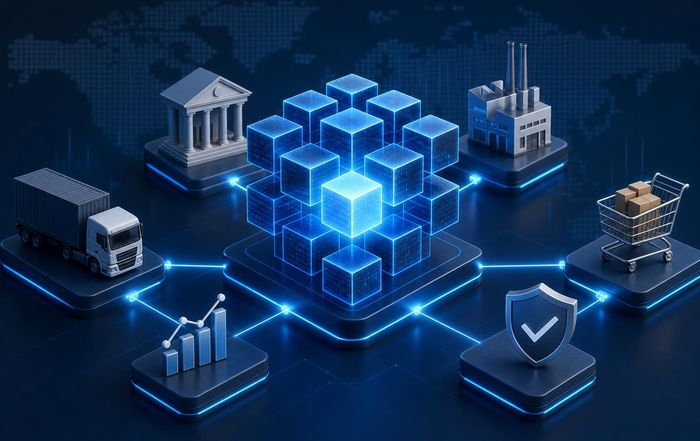
How Blockchain Is Transforming Business Operations
Blockchain Moves From Experiment to Enterprise Backbone
Recently blockchain has started to move from a speculative buzzword associated primarily with cryptocurrencies into an operational backbone for enterprises across North America, Europe, Asia and beyond. On BizNewsFeed.com, this ever changing and rather complex business news evolution is being followed not as a technology curiosity, but as a structural shift in how organizations design processes, govern data, allocate capital and collaborate across borders. What was once a niche interest of early adopters in digital assets has become a foundational layer for supply chains, trade finance, compliance, digital identity, and even cross-border employment models, touching nearly every sector that BizNewsFeed open-eyed readers follow, from AI and automation to banking and capital markets, and from sustainable business to global trade.
Executives in the United States, the United Kingdom, Germany, Singapore and South Korea increasingly regard blockchain not simply as a database innovation but as an institutional technology that redefines how multiple parties can coordinate with high trust and low friction. As regulatory clarity matures in jurisdictions such as the European Union, the United Arab Emirates, Singapore and, more cautiously, the United States, large institutions and growth-stage founders alike are moving from proofs of concept to production-grade platforms. While the speculative excesses of early cryptocurrency markets have been tempered by enforcement actions and more rigorous oversight, the underlying distributed ledger technologies have quietly embedded themselves into the operational fabric of banking, logistics, energy, healthcare and public administration.
From Cryptocurrency Volatility to Institutional Infrastructure
The first wave of blockchain adoption was dominated by public cryptocurrencies such as Bitcoin and Ethereum, which drew intense attention from retail investors, regulators and the media. Volatility, high-profile hacks and uneven regulatory responses created an impression that blockchain was synonymous with speculative trading. Yet throughout this period, research groups such as the World Economic Forum were already highlighting the broader potential of distributed ledgers for supply chains, trade, identity and governance. Learn more about blockchain's early promise and policy debates at the World Economic Forum.
By the early 2020s, major financial institutions, including JPMorgan Chase, BNY Mellon, HSBC, and Deutsche Bank, began piloting distributed ledgers for settlement, collateral management and trade finance. At the same time, central banks from the European Central Bank to the Monetary Authority of Singapore intensified their exploration of central bank digital currencies, pushing blockchain-based infrastructures into the mainstream of monetary and payments policy. Readers following crypto and digital assets on BizNewsFeed have watched as the narrative shifted from "will governments ban crypto?" to "how will regulated digital asset infrastructures coexist with traditional finance?".
The difference in 2026 is that blockchain is no longer framed only as a financial instrument or an alternative asset class. It is increasingly viewed as a generalized trust infrastructure for multi-party business processes. Enterprises now use permissioned and hybrid blockchains to share data with suppliers, customers, regulators and auditors in near real time, while still enforcing strict access controls and privacy safeguards. As a result, the technology is transforming core operational workflows in sectors that previously had little to do with cryptocurrency markets, including manufacturing, agriculture, real estate, healthcare and professional services.
Reinventing Supply Chains and Logistics
Supply chains across Europe, Asia and North America have been under sustained pressure from geopolitical tensions, pandemic disruptions and inflationary shocks. In this environment, blockchain has emerged as a tool for resilience and transparency. Platforms developed by firms such as IBM, Maersk and newer logistics technology players now allow manufacturers, freight forwarders, port authorities, customs agencies and retailers to share a single, tamper-resistant record of the movement of goods, documents and payments.
In Germany, automotive manufacturers use blockchain-based systems to track components from Tier 3 suppliers in Eastern Europe and Asia through to final assembly plants and dealerships. Each step in the chain is recorded as an immutable transaction, with digital signatures from the parties involved and, increasingly, data feeds from IoT sensors that capture temperature, location, humidity and shock events. This integration of blockchain with sensor networks and AI-driven analytics is particularly relevant to readers following technology and AI trends on BizNewsFeed, as it demonstrates how distributed ledgers become more powerful when combined with predictive algorithms and real-time monitoring.
In the food and agriculture sector, retailers in the United States, the United Kingdom and France increasingly require blockchain-based traceability for high-risk products such as leafy greens, meat and seafood. Initiatives inspired by earlier pilots from Walmart and Carrefour now allow consumers to scan QR codes in supermarkets and see the farm of origin, processing facilities and transportation steps, all validated by a distributed ledger. Public health authorities and organizations such as the Food and Agriculture Organization of the United Nations have noted how traceability can improve recall efficiency and reduce food fraud; interested readers can explore broader food traceability initiatives via the FAO.
For businesses, the value lies not only in transparency but also in operational efficiency. When customs authorities in the Netherlands or Singapore can access the same blockchain record of a shipment as the exporter, shipping line and insurer, clearance times can drop dramatically and the risk of document fraud is reduced. This is particularly important for exporters and logistics providers in trade hubs such as Rotterdam, Hamburg, Singapore and Busan, where even marginal improvements in port throughput can translate into significant economic gains and competitive advantage.
Transforming Trade Finance and Banking Operations
Trade finance has long been characterized by paper-intensive processes, fragmented data and high compliance costs. Banks in London, New York, Frankfurt, Dubai and Hong Kong have historically relied on manual document checks, letters of credit, bills of lading and siloed systems to manage risk and regulatory obligations. Blockchain is now reshaping this landscape by providing a shared record of transactions, collateral and documentation that multiple financial institutions and corporates can trust without relying on a single central intermediary.
Consortia involving major banks and technology providers have built platforms where purchase orders, invoices, shipping documents and payment instructions are recorded on a distributed ledger, with smart contracts automating key steps such as release of funds upon delivery confirmation. This reduces the time and cost associated with document reconciliation and lowers the risk of duplicate financing or fraudulent invoices. For readers interested in the evolution of banking, BizNewsFeed's banking coverage has tracked how these platforms are beginning to integrate with existing core banking systems, rather than attempting to replace them outright.
In parallel, the growth of regulated stablecoins and tokenized deposits has created new rails for cross-border payments and corporate treasury operations. Financial regulators in jurisdictions such as Switzerland, Singapore and the United Arab Emirates have provided clearer guidelines for how banks can issue and use tokenized forms of commercial bank money, enabling near-instant settlement of large-value transactions across time zones. Organizations such as the Bank for International Settlements have published extensive research on these developments and on the potential of wholesale CBDCs; readers can examine these insights through the BIS innovation hub.
From a risk and compliance standpoint, blockchain's transparent audit trail supports more efficient anti-money laundering and sanctions screening, particularly when combined with advanced analytics and AI. However, this also creates new responsibilities for financial institutions, which must ensure that their blockchain-based operations comply with evolving regulations such as the European Union's Markets in Crypto-Assets Regulation and updated guidance from bodies like the Financial Action Task Force. Learn more about global AML standards and digital assets at the FATF.
Smart Contracts and Automated Business Logic
One of the most transformative aspects of blockchain for business operations is the use of smart contracts, which are self-executing agreements with the terms directly written into code on a distributed ledger. These software-based contracts automatically enforce conditions when predefined criteria are met, reducing the need for manual intervention, reconciliation and dispute resolution.
In the insurance sector, firms in the United States, the United Kingdom and South Korea are using smart contracts to manage parametric insurance products, where payouts are triggered by objective events such as weather conditions, flight delays or commodity price movements. When an event is verified by trusted data oracles, the smart contract automatically releases funds to the policyholder, often within minutes. This model is particularly powerful in regions prone to climate-related disasters, where traditional claims processes can be slow and administratively complex. Businesses interested in how digital innovation intersects with climate resilience can explore broader perspectives on sustainable business transformation on BizNewsFeed.
In commercial real estate, smart contracts are being piloted for rental agreements, escrow arrangements and tokenized property shares. Land registries in countries such as Sweden and the United Arab Emirates have experimented with blockchain-based property records, while private platforms allow fractional ownership of buildings in cities like London, New York and Singapore. These developments are closely tied to the broader tokenization trend, in which real-world assets such as equities, bonds, real estate and even fine art are represented as digital tokens on a blockchain, enabling more granular ownership, 24/7 trading and potentially deeper liquidity.
Smart contracts are also reshaping procurement and vendor management. Large manufacturers in Germany, Japan and Canada are deploying blockchain-based systems in which purchase orders, delivery confirmations, quality checks and payments are encoded into a series of smart contracts. As milestones are reached and verified, payments are automatically released, reducing days sales outstanding for suppliers and lowering administrative overhead for buyers. For many organizations, this is not simply a technology upgrade; it is a catalyst for rethinking working capital management, risk sharing and supplier relationships across the value chain.
Digital Identity, Compliance and Data Governance
A persistent challenge in global business operations has been establishing reliable digital identities for individuals, organizations and devices, while balancing privacy, security and regulatory obligations. Blockchain-enabled digital identity frameworks are now emerging as a credible solution, particularly in the European Union, the United Kingdom and parts of Asia, where regulators and industry consortia are collaborating on standards for verifiable credentials and decentralized identifiers.
In these models, individuals and organizations hold cryptographically secure credentials in digital wallets, which can be selectively disclosed to service providers, employers, banks or government agencies. Instead of repeatedly submitting the same documents to multiple entities, users can share only the necessary attributes, such as proof of age, professional qualifications or corporate registration status, while the underlying data remains under their control. Organizations such as the World Wide Web Consortium (W3C) have developed technical standards for these systems; readers can explore digital identity standards at the W3C.
For businesses operating across multiple jurisdictions, blockchain-based identity and credential systems can streamline know-your-customer and know-your-business processes, reduce onboarding times and improve the accuracy of compliance checks. This is particularly relevant for financial institutions, global employers and professional services firms that manage cross-border client relationships in markets from Canada and Australia to Brazil and South Africa. On BizNewsFeed, the intersection of identity, compliance and talent mobility is increasingly visible in coverage of jobs and global hiring trends, as organizations build remote-first teams that span continents and regulatory regimes.
Data governance is another area where blockchain is reshaping operational norms. By providing tamper-evident logs of data access and changes, distributed ledgers can help organizations demonstrate compliance with data protection regulations such as the EU's General Data Protection Regulation and similar frameworks in other regions. At the same time, enterprises must carefully design their blockchain architectures to respect privacy and data minimization principles, often by using off-chain storage with on-chain proofs, or by adopting advanced cryptographic techniques such as zero-knowledge proofs.
Blockchain, AI and the Next Generation of Business Automation
For BizNewsFeed readers who follow both AI and blockchain, one of the most significant trends in 2026 is the convergence of these technologies in enterprise workflows. Artificial intelligence systems are increasingly tasked with making or recommending operational decisions in areas such as credit scoring, supply chain optimization, fraud detection and dynamic pricing. Blockchain can provide the transparent, tamper-resistant record of data inputs, model versions and decision outputs that regulators and stakeholders demand for accountability and auditability.
In banking and capital markets, AI-driven trading algorithms and risk models can log their activity and parameter changes to a permissioned blockchain, enabling compliance teams and external auditors to reconstruct decision paths and verify that policies were followed. In healthcare, AI diagnostic tools can record model updates and training data provenance on a ledger, supporting traceability and trust in clinical settings. Organizations such as OECD and UNESCO have emphasized the importance of trustworthy AI and robust governance frameworks; readers can explore AI governance principles through the OECD AI Observatory.
For operations leaders in manufacturing, logistics and energy, the combination of AI and blockchain enables more sophisticated multi-party optimization. For example, in a European energy grid, AI models can forecast demand and supply from renewable sources, while blockchain-based smart contracts automatically adjust pricing and dispatch signals for industrial consumers and distributed energy resources. This creates a more dynamic and resilient system, where incentives and data flows are aligned across utilities, industrial customers and prosumers. Businesses seeking a broader macroeconomic context for these shifts can turn to BizNewsFeed's coverage of global economic trends, where digital infrastructure and energy transition are increasingly intertwined.
Implications for Founders, Funding and Corporate Strategy
For founders and growth-stage companies, blockchain's operational impact is not limited to technical architecture; it has profound implications for business models, capital formation and governance. Startups in hubs such as San Francisco, London, Berlin, Singapore and Sydney are building products that embed blockchain at the core of their value proposition, from cross-border B2B payments and supply chain finance platforms to decentralized data marketplaces and digital identity networks.
At the same time, venture capital and private equity investors have become more discerning, favoring teams that combine technical expertise with deep domain knowledge in sectors such as logistics, healthcare, manufacturing and financial services. The speculative token issuance models of the late 2010s have largely given way to more regulated and institutionally acceptable structures, including equity plus token hybrids, compliant security token offerings and tokenized fund interests. Readers tracking startup ecosystems and capital flows can explore more on founders and funding dynamics and funding trends on BizNewsFeed, where blockchain-native ventures are increasingly assessed alongside AI, climate tech and fintech peers.
For established corporations, blockchain adoption has moved from isolated innovation labs to board-level strategic discussions. In sectors such as automotive, pharmaceuticals, consumer goods and financial services, leadership teams in the United States, Europe and Asia-Pacific are now evaluating blockchain not as an optional experiment but as a necessary capability to remain competitive in a world of transparent, data-rich and highly automated value chains. This involves difficult decisions about which consortia to join, which platforms to build in-house, how to integrate with legacy systems and how to manage new forms of ecosystem governance.
Corporate boards are also grappling with the implications of tokenization for investor relations and market structure. As more assets become programmable and fractionalized, the line between public and private markets may blur, affecting how companies think about capital raising, liquidity and shareholder engagement. Readers interested in these structural shifts in capital markets can find ongoing analysis in BizNewsFeed's markets coverage, where tokenization, digital exchanges and alternative trading systems are becoming regular features.
Regional Dynamics: United States, Europe, Asia and Beyond
While blockchain's core principles are global, its adoption patterns vary significantly by region, reflecting differences in regulatory approaches, industrial structures and digital infrastructure. In the United States, innovation has been driven by a combination of Silicon Valley startups, Wall Street institutions and a large base of crypto-native companies, but regulatory uncertainty and fragmented oversight have at times slowed enterprise deployments. Nevertheless, sectors such as capital markets infrastructure, healthcare and defense have seen significant blockchain pilots, often in partnership with major cloud providers and system integrators.
In the European Union, a more coordinated regulatory approach, exemplified by the Markets in Crypto-Assets Regulation and the European Blockchain Services Infrastructure, has provided clearer guardrails for enterprises and public agencies. Countries such as Germany, France, Spain, Italy and the Netherlands have supported blockchain initiatives in energy, mobility, agriculture and public services, often with an emphasis on interoperability, sustainability and data protection. Businesses operating across Europe must navigate both opportunities and compliance obligations, particularly as digital identity and data governance frameworks mature.
Asia presents a diverse picture. Singapore has established itself as a leading hub for regulated digital assets and enterprise blockchain innovation, with strong support from the Monetary Authority of Singapore and a vibrant ecosystem of startups and multinational corporations. South Korea and Japan have seen significant adoption in gaming, payments and supply chains, while China has pursued a more state-led approach through its Blockchain-based Service Network and the digital yuan, focusing on applications in trade, logistics and government services. In emerging markets across Southeast Asia, Africa and South America, blockchain is being used to address infrastructure gaps in payments, land registration and supply chain finance, often in partnership with development agencies and NGOs.
For global businesses and investors who follow international developments on BizNewsFeed, understanding these regional nuances is critical for designing effective blockchain strategies, selecting partners and complying with local regulations. It also shapes talent strategies, as expertise in blockchain engineering, cryptography, token economics and regulatory affairs becomes a sought-after skill set in markets from Toronto and Zurich to Cape Town and São Paulo.
Operational Challenges, Risk Management and Governance
Despite the momentum, blockchain adoption is not without challenges, and executives must approach it with a clear-eyed understanding of risks and constraints. Technical scalability, interoperability between different platforms, energy consumption, governance of shared infrastructures and regulatory uncertainty remain significant issues. While advances such as proof-of-stake consensus, layer-two scaling solutions and cross-chain bridges have improved performance and sustainability, enterprises still need to carefully assess which networks and architectures align with their operational requirements and risk tolerance.
Cybersecurity is a central concern. While blockchains provide strong guarantees of data integrity, the broader ecosystem, including wallets, smart contracts and integration layers with legacy systems, can be vulnerable to exploits if not properly designed and audited. Organizations must invest in rigorous security practices, third-party audits and continuous monitoring, particularly when managing high-value transactions or sensitive data. Institutions such as ENISA and NIST have published guidance on blockchain security; businesses can explore cybersecurity best practices through resources like the NIST blockchain publications.
Governance of shared blockchain platforms also poses complex questions. When multiple competitors share a distributed ledger for supply chain, trade finance or industry data, they must agree on rules for participation, data access, upgrades and dispute resolution. This demands new forms of consortium governance, legal frameworks and stakeholder engagement, which can be as challenging as the technical implementation. For many organizations, success in blockchain adoption depends as much on organizational design and ecosystem management as on software engineering.
From a workforce perspective, blockchain is reshaping roles and skills across IT, operations, finance, legal and compliance. Professionals must develop a working understanding of distributed ledger concepts, smart contract logic and token-based incentives, even if they are not writing code themselves. At the same time, the technology is enabling new models of remote and cross-border work, as blockchain-based identity, payroll and collaboration tools make it easier to build distributed teams across time zones and regulatory environments. Readers interested in the human capital dimension can follow jobs and future-of-work analysis on BizNewsFeed, where blockchain is increasingly part of broader conversations about digital skills and organizational resilience.
What will Blockchain Become for the Economy Looking Long Ahead
As blockchain becomes embedded in the operational core of businesses worldwide, the strategic question for leaders is no longer whether to engage with the technology, but how to do so in a way that reinforces competitiveness, resilience and trust. This requires a disciplined approach that starts with business problems rather than technology for its own sake, rigorous evaluation of total cost of ownership, and a focus on interoperability and standards that can evolve with the broader ecosystem.
For the growing fact-seeking business news watchers of BizNewsFeed.com, covering the United States, Europe, Asia-Pacific, Africa and the Americas, the most compelling blockchain stories are those where distributed ledgers quietly make complex operations simpler, more transparent and more accountable. Whether in cross-border trade, sustainable supply chains, digital identity, tokenized capital markets or AI governance, blockchain is emerging as a foundational layer of the digital economy, one that will increasingly shape how value is created, measured and exchanged across industries and borders.
As BizNewsFeed editorial team continues to try and track developments across business and strategy, markets and finance, technology and AI, and the broader news agenda, blockchain will remain a central thread that connects innovation with operational reality. For executives, founders, investors and policymakers, the imperative is to build the expertise, partnerships and governance frameworks needed to harness this technology not as a speculative side bet, but as a core component of trustworthy, data-driven and globally connected business operations.
Please do contact us if you want us to address other topics and perspectives in future articles.