

How AI Is Re-Wiring Global Logistics and Shipping
A New Operating System for Global Trade
Artificial intelligence has moved from experimental pilot projects to the core operating system of global logistics and shipping, reshaping how goods move between factories, ports, warehouses and end customers. For the audience of BizNewsFeed.com, which spans executives, founders, investors and policymakers across the United States, Europe, Asia, Africa and the Americas, the story of AI in logistics is no longer about futuristic potential; it is about competitive survival, operational resilience and the redefinition of value creation across supply chains.
As cross-border trade has recovered and then surpassed pre-pandemic levels, with e-commerce, nearshoring and geopolitical realignments increasing complexity, the logistics sector has faced simultaneous pressure to reduce costs, cut emissions, improve reliability and maintain agility in the face of shocks. In this environment, AI has emerged as the only realistic way to orchestrate millions of daily decisions across trucking fleets, container ships, air cargo, rail networks and last-mile delivery. From predictive routing and dynamic pricing to autonomous yard operations and intelligent customs clearance, AI now sits at the heart of the operational playbooks used by leading logistics providers and shippers covered across BizNewsFeed's focus areas of business, technology, markets and global trends.
Why Logistics Became an AI Priority
The logistics and shipping industry has always been data-rich but insight-poor. For decades, operators generated enormous volumes of information from telematics, port calls, bills of lading, warehouse management systems and customer orders, yet most decisions were still based on static rules, experience and fragmented spreadsheets. The disruptions of 2020-2023 exposed the limits of this approach, as port congestion, capacity shortages and volatile demand created a crisis of visibility and control.
By 2024, leading consultancies and institutions such as McKinsey & Company and the World Economic Forum were already documenting how AI-enabled supply chains could dramatically improve forecast accuracy and asset utilization. Readers can explore how advanced analytics has changed supply chain resilience through resources such as the World Economic Forum's work on supply chains. These early analyses helped establish a clear business case: AI could drive double-digit percentage improvements in on-time performance, fuel consumption, container turnaround and labor productivity, while also reducing working capital tied up in inventory.
For global logistics leaders, from major shipping lines to integrators and digital freight forwarders, AI quickly became a board-level topic rather than a back-office experiment. That shift aligned closely with the broader AI adoption wave that BizNewsFeed has followed in depth on its AI industry coverage, where the emphasis has consistently been on measurable business impact rather than hype.
Core AI Technologies Transforming the Supply Chain
The AI architecture now powering logistics in 2026 combines several distinct but interlocking capabilities. At the foundation are machine learning models that ingest historical and real-time data to predict demand, transit times, disruptions and equipment failures. These models are increasingly built on cloud platforms from providers such as Microsoft Azure, Amazon Web Services and Google Cloud, whose logistics reference architectures are documented on sources like the Microsoft Azure architecture center.
On top of predictive analytics, optimization engines apply operations research and reinforcement learning to propose the best decisions in routing, scheduling, inventory placement and capacity allocation. These engines weigh cost, time, emissions, service levels and constraints such as driver hours or port slot availability, creating dynamic plans that adjust as conditions change.
Computer vision has become a critical component in ports, warehouses and yards. Cameras combined with AI models now monitor container movements, identify damage, read license plates and track pallet flows without manual scanning, improving both speed and accuracy. In large distribution centers, AI-guided robotic systems co-ordinate with human workers, optimizing picking paths and reducing empty travel.
Natural language processing and large language models are increasingly used to interpret shipping documents, customs declarations and unstructured communications between carriers, shippers and regulators. Intelligent document processing tools can now extract and validate data from bills of lading, invoices and certificates of origin at scale, reducing delays and compliance risk. Industry observers can see how these trends align with broader AI in trade and customs by referring to resources such as the World Trade Organization's analysis of digital trade, accessible via the WTO's digital trade insights.
Generative AI has also entered operational workflows, not just for chatbots but for scenario planning and network design. Logistics planners use AI co-pilots to simulate new shipping lanes, warehouse locations or modal mixes, combining quantitative optimization with narrative explanations that non-technical executives can understand. This convergence of predictive, prescriptive and generative AI is central to the new logistics operating model and is increasingly reflected in the innovation coverage of BizNewsFeed's news and economy sections.
Port Operations: From Bottlenecks to Intelligent Hubs
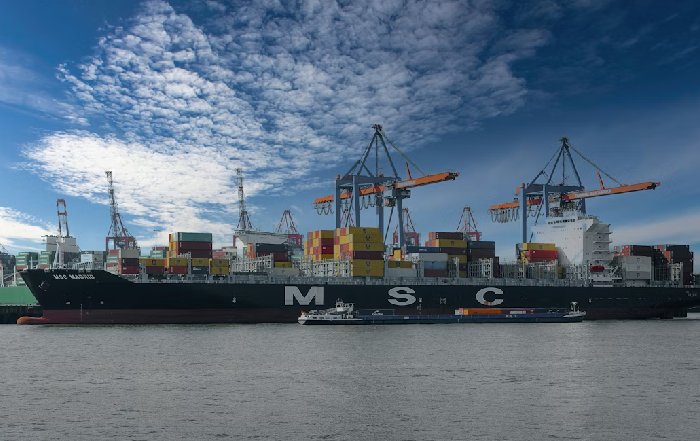
Global ports, long seen as bottlenecks in international trade, have become testbeds for AI-enabled transformation. Major hubs in Asia, Europe and North America now deploy AI to orchestrate vessel berthing, crane assignments, yard stacking and gate operations, reducing turnaround times and congestion.
AI-driven berth planning systems integrate weather forecasts, tidal information, vessel schedules and historical performance to assign optimal berthing windows. This has allowed port authorities and terminal operators to manage increasing throughput without equivalent physical expansion, a crucial development in dense urban ports where land is constrained. The experience of large ports documented by organizations such as the International Maritime Organization (IMO) and the OECD's International Transport Forum, which can be explored through the ITF's maritime transport research, has provided a blueprint for other regions.
In the yard, AI models determine where to stack containers to minimize re-handles and speed up retrieval, learning from historical patterns and current demand. Computer vision systems track container IDs and chassis movements in real time, reducing the need for manual checks and improving safety. Some of the most advanced terminals now operate semi-autonomous or fully autonomous cranes and yard vehicles, guided by AI to avoid collisions and optimize energy usage.
For the global readership of BizNewsFeed.com, especially in trade-dependent economies like Singapore, the Netherlands, South Korea and the United Arab Emirates, the port AI revolution is not merely a technology story; it is a strategic one. Ports that successfully deploy AI are increasingly favored by major shipping alliances and global shippers, reinforcing their role as critical nodes in reconfigured supply chains that are shifting due to geopolitical tensions, sanctions regimes and regionalization.
AI on the High Seas: Smarter Shipping and Fleet Management
While ports have become more intelligent, the maritime leg of logistics has also undergone a profound AI-driven upgrade. Shipping lines and vessel operators now rely on AI for route optimization, fuel management, maintenance and safety monitoring.
Voyage optimization systems use machine learning combined with high-resolution weather and ocean data to chart routes that minimize fuel consumption and emissions while respecting schedules and safety constraints. These systems continuously adjust recommended speed and course based on changing conditions, reducing bunker costs and helping carriers comply with tightening environmental regulations. For readers tracking the intersection of sustainability and maritime policy, the International Maritime Organization provides detailed information on decarbonization rules and measures, which can be explored via the IMO's greenhouse gas strategy.
Predictive maintenance has become another major value driver. By analyzing engine telemetry, vibration data and historical failure patterns, AI models forecast when critical components are likely to fail, enabling maintenance to be scheduled during port calls rather than after breakdowns at sea. This reduces unplanned downtime and costly delays, while also enhancing safety.
Crew management and safety monitoring have also benefited from AI. Wearable sensors, computer vision and anomaly detection algorithms help identify fatigue risks, unsafe behaviors or hazardous conditions, allowing shipping companies to intervene early. As regulators and insurers in markets like the United States, the European Union and Asia-Pacific increasingly scrutinize safety performance, AI-supported compliance is becoming a differentiator that global investors and charterers pay close attention to, a trend that aligns with the risk-focused lens many BizNewsFeed readers bring to markets and funding decisions.
AI in Trucking, Rail and Last-Mile Delivery
Beyond the oceans, AI has become indispensable across land-based logistics networks that connect ports, factories, distribution centers and consumers. In trucking, route optimization platforms now combine real-time traffic, weather, delivery windows, driver hours and toll costs to dynamically update routes and schedules. These systems are no longer limited to large fleets; cloud-based solutions have made advanced optimization accessible to small and medium-sized carriers in markets from Germany and the United Kingdom to Brazil, South Africa and Southeast Asia.
Driver assistance technologies, powered by AI-powered computer vision, help reduce accidents and improve fuel efficiency. Lane-keeping, adaptive cruise control and collision avoidance are increasingly standard in new heavy-duty trucks, while in-cab coaching tools provide real-time feedback on driving behavior. These developments are tracked closely by regulators and safety organizations such as the U.S. National Highway Traffic Safety Administration, whose work on automated driving systems can be reviewed via the NHTSA's automated vehicles overview.
Rail freight operators have similarly adopted AI for network optimization, predictive maintenance of rolling stock and infrastructure, and demand forecasting. AI-enhanced yard management systems improve the assembly and dispatch of trains, reducing dwell times and improving reliability for shippers that depend on rail for bulk commodities and intermodal transport.
In last-mile delivery, where e-commerce growth has driven intense competition and cost pressure, AI orchestrates everything from route sequencing to parcel allocation and delivery time predictions. Urban logistics is increasingly shaped by AI models that balance delivery density, congestion constraints, low-emission zones and customer preferences for narrow delivery windows. Autonomous delivery pilots, whether via sidewalk robots or small autonomous vehicles, remain limited in scale, but AI-driven planning and dispatching have become mainstream across major metropolitan areas in North America, Europe and parts of Asia.
For job markets, this AI-enabled optimization has not eliminated human roles but has changed their nature. Demand has grown for dispatchers who can interpret AI recommendations, for maintenance technicians who understand sensor-rich equipment, and for data specialists who can manage logistics datasets. Readers interested in how these trends intersect with employment and skills can find relevant analysis through BizNewsFeed's coverage of jobs and economy, where the focus is increasingly on how workers and companies adapt to AI-augmented workflows.
Warehousing, Fulfilment and the Rise of the Smart Distribution Network
Warehousing and fulfilment centers sit at the heart of modern logistics, especially in sectors such as retail, manufacturing, pharmaceuticals and high-tech. By 2026, AI has become the central nervous system of these facilities, determining where inventory is stored, how orders are picked and packed, and how labor and robotics are allocated.
AI-driven warehouse management systems analyze order histories, product dimensions, co-purchase patterns and handling requirements to decide optimal storage locations, often re-slotting inventory dynamically as demand shifts. This reduces travel time for pickers and robots, increases throughput and shortens order cycle times. Computer vision systems monitor inventory levels on shelves and racks, detecting discrepancies and damage without manual cycle counts.
Robotics, guided by AI, has moved beyond isolated automation islands to integrated fleets of mobile robots, robotic arms and sortation systems that collaborate with human workers. The design of these hybrid systems has become a major area of expertise for logistics technology providers and integrators. Analysts and practitioners can deepen their understanding of this shift by exploring research from organizations such as the MIT Center for Transportation & Logistics, which shares insights through the MIT CTL research portal.
Network-wide, AI has transformed how companies decide where to locate warehouses and how to allocate inventory across them. Multi-echelon inventory optimization models now incorporate not only demand forecasts but also disruption risks, transportation lead times, carbon intensity and service-level commitments. For multinational companies operating across the United States, Europe, Asia and emerging African markets, these AI-optimized distribution networks are central to meeting customer expectations while managing geopolitical, regulatory and climate-related risks.
For BizNewsFeed.com, whose audience includes founders building logistics start-ups and investors evaluating supply chain technology, the rise of smart distribution networks is also a story about entrepreneurship and capital allocation. Many of the most dynamic early-stage companies covered in the platform's founders and funding sections are focused on AI-native warehouse software, robotics orchestration and cross-border fulfilment platforms.
Financial, Banking and Crypto Dimensions of AI-Driven Logistics
As AI improves the efficiency and transparency of logistics, it is also reshaping the financial flows and risk models that underpin global trade. Banks and trade finance providers increasingly rely on AI-enhanced data from logistics networks to assess credit risk, detect fraud and structure financing solutions.
Real-time shipment visibility, combined with AI-based risk scoring, allows global banks to offer more flexible inventory and receivables financing, particularly to small and mid-sized exporters in regions such as Southeast Asia, Africa and Latin America. These developments are aligned with broader digital transformation in banking that BizNewsFeed regularly examines in its banking and business coverage.
On the compliance side, AI is used to screen trade documents, counterparties and cargo data against sanctions lists, export controls and anti-money-laundering regulations. This is especially important in a world of rising geopolitical complexity, where regulators in the United States, European Union and other jurisdictions are tightening oversight of dual-use goods, sensitive technologies and sanctioned entities.
The intersection of logistics and crypto has also evolved. While early experiments with blockchain-based trade platforms were often over-promised, by 2026 a more pragmatic model has emerged. Distributed ledger technologies are used selectively for high-value, multi-party trade flows where provenance, tamper-proof records and automated settlement via smart contracts deliver clear benefits. AI plays a crucial role in validating data inputs, detecting anomalies and orchestrating workflows around these digital ledgers. Readers following developments in this space can connect the dots through BizNewsFeed's dedicated crypto and global sections, where the emphasis is on real-world adoption rather than speculative narratives.
Sustainability, Regulation and the ESG Imperative
For logistics and shipping leaders, AI-driven efficiency is no longer just a cost or service play; it is central to meeting environmental, social and governance (ESG) expectations from regulators, investors and customers. The sector is under intense pressure to decarbonize, reduce local pollutants, improve labor conditions and increase transparency across complex supply chains.
AI enables more precise measurement and optimization of emissions across all modes of transport, from vessel fuel consumption and truck routing to warehouse energy usage. Companies can now model the carbon impact of different routing options, modal choices and consolidation strategies in near real time, enabling sustainability-aware decision-making at scale. This capability aligns with global initiatives on sustainable logistics and green corridors promoted by institutions such as the International Energy Agency (IEA), whose work on transport decarbonization is accessible through the IEA's transport sector analysis.
Regulators in the European Union, United States and other jurisdictions are tightening reporting requirements on emissions, supply chain due diligence and human rights. AI-enabled traceability systems help companies map their supply chains, identify high-risk nodes and document compliance with regulations such as the EU's Corporate Sustainability Reporting Directive and deforestation rules.
For the BizNewsFeed.com audience, many of whom are responsible for sustainability strategies or investment decisions, the convergence of AI, logistics and ESG is a defining theme. The platform's sustainable business coverage regularly highlights how logistics efficiency and environmental performance are becoming inseparable, with AI as the common enabler.
Regional Perspectives: United States, Europe, Asia and Beyond
Although AI adoption in logistics is global, regional differences matter. In the United States and Canada, the focus has been on large-scale over-the-road trucking optimization, port modernization on both coasts and the integration of AI into sprawling distribution networks serving e-commerce and retail. Labor dynamics, union negotiations and regulatory debates around autonomous vehicles have shaped the pace and form of deployment.
In Europe, where environmental regulation and urban congestion are more pronounced, AI has been closely tied to decarbonization, intermodal transport and city logistics. Countries such as Germany, the Netherlands, Sweden and Denmark have invested heavily in AI-enabled rail, inland waterways and green corridors, while cities in France, Spain and Italy have used AI to manage low-emission zones and delivery access.
Across Asia, from China and South Korea to Singapore, Japan and Thailand, AI in logistics has been driven by a combination of state-backed infrastructure investments, advanced manufacturing supply chains and fast-growing e-commerce platforms. Mega-ports and smart logistics parks have become showcases for AI-enabled operations, while regional trade agreements have encouraged cross-border digital integration.
Emerging markets in Africa and South America, including South Africa, Brazil and others, have approached AI in logistics with a focus on leapfrogging legacy systems, improving trade facilitation and unlocking export potential in agriculture, mining and manufacturing. Cloud-based logistics platforms and mobile-first solutions have allowed smaller operators to tap into AI capabilities without heavy upfront investment.
For a global readership that spans these geographies, BizNewsFeed.com serves as a bridge, connecting developments in advanced logistics markets with opportunities and challenges in emerging ones, and framing AI not as a one-size-fits-all solution but as a set of tools that must be adapted to local infrastructure, regulation and talent ecosystems.
Talent, Governance and the Trust Question
No discussion of AI in logistics and shipping is complete without addressing the human and governance dimensions that underpin trust. Efficiency gains alone are not enough; companies must demonstrate that AI-driven systems are reliable, fair, secure and aligned with broader corporate values.
Leading logistics providers and shippers have established AI governance frameworks that define clear responsibilities, risk thresholds and escalation paths. These frameworks cover data quality, model validation, cybersecurity, privacy and ethical considerations such as algorithmic bias in driver assignment or worker scheduling. Many organizations draw on best-practice guidance from bodies such as the OECD and the European Commission, which have published principles for trustworthy AI. For those interested in the policy dimension, the OECD AI Policy Observatory offers a useful entry point via the OECD's AI policy portal.
Talent remains a critical bottleneck. The logistics sector has had to compete with finance, technology and other industries for data scientists, machine learning engineers and AI product managers. At the same time, frontline workers, from port operators and drivers to warehouse staff, require reskilling to work effectively with AI-enabled systems. Companies that invest in training, transparent communication and co-design of AI tools with users are seeing higher adoption and better outcomes, a pattern that BizNewsFeed regularly highlights in its technology and business reporting.
Trust also extends to customers and partners. Shippers need confidence that AI-generated ETAs, risk scores and sustainability metrics are accurate and explainable. Regulators require assurance that AI-driven decisions in customs clearance, sanctions screening or safety monitoring are auditable. Building this trust demands not only technical robustness but also clear communication, third-party validation and, in many cases, collaborative industry standards.
What Comes Next: Strategic Implications for Business Leaders
As of 2026, AI in logistics and shipping has moved beyond isolated pilots into a phase of systemic integration. For business leaders, founders and investors who follow BizNewsFeed.com, the strategic implications are profound.
First, efficiency gains from AI are increasingly baked into competitive benchmarks. Companies that lag in adoption face higher costs, lower service levels and weaker resilience to disruptions, which will be reflected in their market valuations and access to capital.
Second, AI is changing the structure of the logistics industry itself. Digital-first logistics providers, AI-native freight platforms and technology-driven port and warehouse operators are gaining market share, attracting investment and driving consolidation. Traditional players that fail to modernize risk being marginalized or acquired.
Third, the intersection of AI with sustainability, regulation, finance and labor means that logistics strategy can no longer be siloed within operations. Boards and executive teams must treat AI-enabled logistics as a cross-functional priority, involving technology, finance, ESG, risk and HR leaders in a cohesive roadmap.
Finally, for a global audience spanning North America, Europe, Asia, Africa and South America, AI in logistics and shipping is not just about moving goods more efficiently; it is about enabling new forms of trade, supporting resilient supply chains and contributing to a more sustainable and inclusive global economy. As BizNewsFeed.com continues to track developments across AI, banking, economy, markets and sustainable business, AI-driven logistics will remain a central theme, shaping how companies compete, collaborate and create value in the years ahead.